
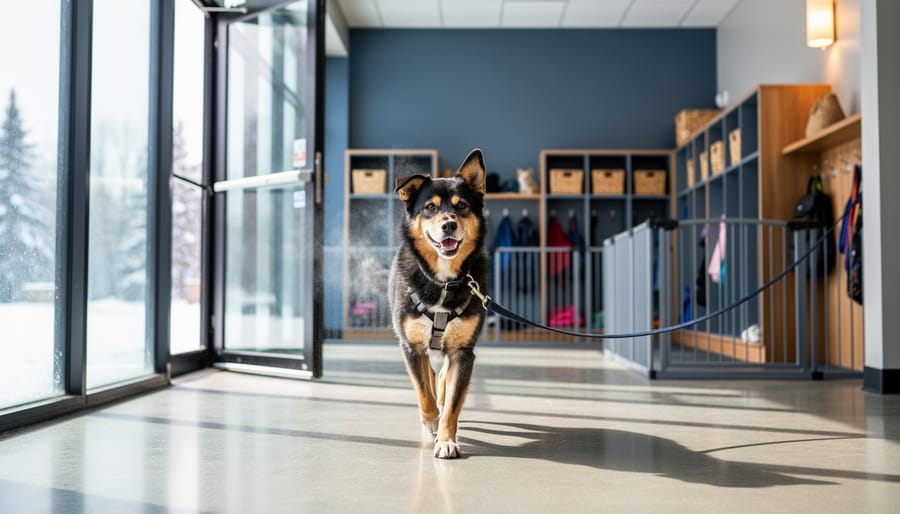
Yes, dog daycare can be a great fit for a high energy dog, as long as the facility is built for it. The right daycare gives an athletic, always-on dog a full day of supervised play, sniffing, and rest breaks, so they come home pleasantly tired instead of pacing the living room at 9 p.m. The wrong one just adds more chaos to an already revved-up pup.
That difference is what this guide is about. In Ottawa, where a long winter can shrink daily walks to a quick loop around the block, daycare is often the outlet an active dog needs. But not every dog thrives in a big group, and not every facility handles a bouncy Border Collie or a tireless Lab mix well.
Below, we walk through what a typical day looks like, how to tell whether your dog is a good match, and what separates a quality daycare from one that’s simply keeping dogs busy. You’ll also find a quick-reference evaluation table, a key takeaway box, and answers to the questions Ottawa owners ask most. Whether your dog needs a few days a week or just an occasional energy reset, you’ll know what to look for before you book a trial day.
Why Daycare Can Be a Game Changer for Energetic Dogs
Physical Exercise vs. Mental Stimulation: Why Dogs Need Both
Running and rough-and-tumble play are great for burning off physical energy, but they only tell half the story. A dog’s brain gets tired too, and mental effort is often what finally takes the edge off a very active dog.
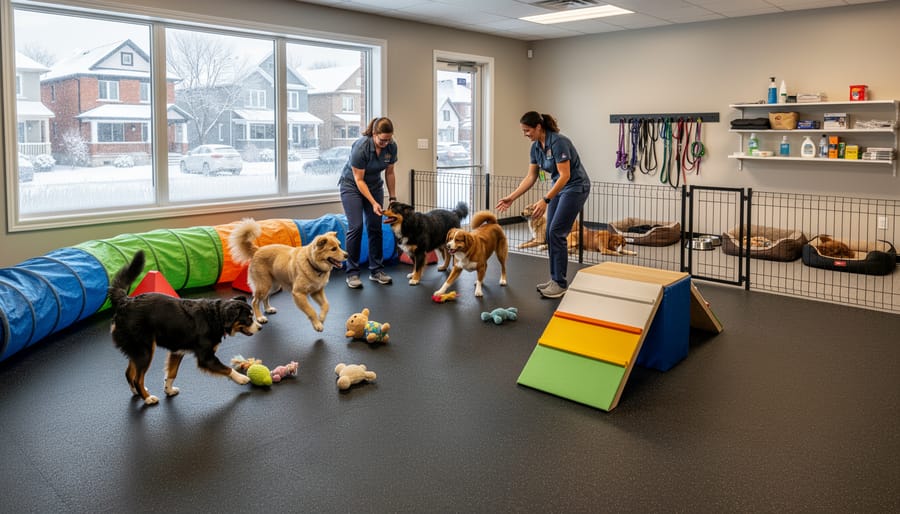
At daycare, that mental workout happens all day long. Your dog is reading body language, learning the rules of each new play group, sniffing out unfamiliar scents, and solving little puzzles during enrichment games. All of that thinking is surprisingly draining, even for a dog who seems to have a bottomless battery.
Think of it like the difference between a long hike and a long day of learning something new. Both leave you tired, but in different ways, and you need both to feel truly settled. A dog who gets a balance of movement and mental engagement tends to come home relaxed rather than wired, ready to curl up beside you instead of redecorating the couch.
What a Typical Day Looks Like for a High Energy Dog at Daycare
A typical day starts with drop-off, and a good daycare makes that moment calm instead of chaotic. Your dog gets a friendly greeting, a quick check-in with staff, and a few minutes to sniff around and settle before joining the group. If you’re curious about the bigger picture, our guide to what happens at daycare covers the full experience.
Once your pup is settled, the first play session begins. This is where high energy dogs shine. Staff group dogs by size, age, and play style, so your zoomie-loving Lab isn’t stuck with a nervous senior. Expect chasing, wrestling, and plenty of happy running, all with trained staff watching body language closely.
Midmorning often brings a change of pace. Many facilities offer enrichment, like puzzle toys, sniffing games, or short training moments. These activities tire out the brain, which matters just as much as tiring out the legs. A dog who’s had a chance to think and problem-solve tends to come home calmer.
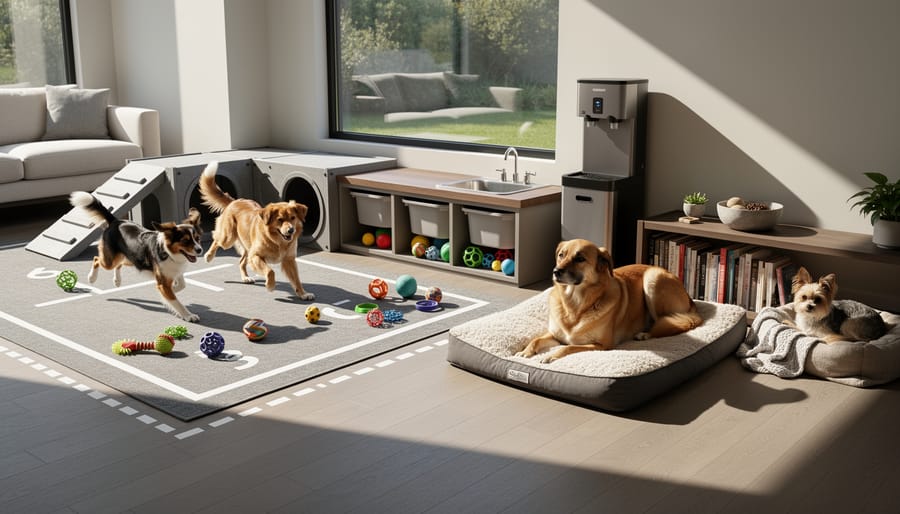
Then comes the part many owners don’t expect: scheduled rest. Good daycares build in quiet breaks, often in individual suites or calm rooms, so dogs can recharge. Without downtime, even the friendliest dog can become overstimulated, which is when play gets pushy or frantic. Rest periods keep the fun healthy.
Throughout the day, fresh water is always available, and some programs include a snack or mealtime if you’ve sent food along. Staff also use these moments to check on each dog’s mood and energy.
The afternoon usually repeats the rhythm: another round of play, another chance to wind down. By pick-up, your dog should look relaxed and pleasantly tired, not wired or frazzled. Staff will often share a quick recap of who they played with and how the day went, so you know exactly how your pup spent their time.
Is Your High Energy Dog a Good Fit for Group Play?
What Happens During a Temperament Evaluation
A temperament evaluation is simply a relaxed trial run, and it’s all about finding the right fit for your dog. Many Ottawa owners find it helpful to prepare a few daycare interview questions beforehand, since staff will ask about your dog’s habits and happily answer yours in return.
During the visit, your dog usually meets a team member first, then gets introduced to one or two calm, friendly dogs. Staff watch how your pup greets new faces, how quickly they settle, and how they respond to play. They’re looking at body language, like loose wiggles versus stiff posture, and whether your dog takes breaks or gets overly wound up (that’s “overarousal,” when excitement tips past fun).
There’s no pass or fail here. If your dog is a little shy or extra bouncy, staff can suggest a smaller group or a shorter first day.
Signs Your Dog Is Thriving (and Signs They Might Need a Different Setup)
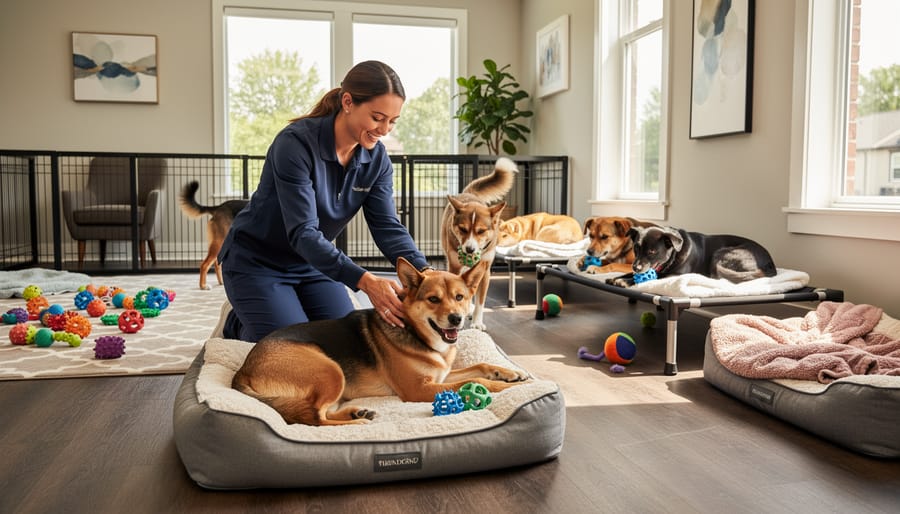
A dog who’s thriving at daycare usually tells you so before you’ve even left the parking lot. Watch for an eager tail and a bounce in their step when you arrive for drop-off, then soft, loose body language at pick-up: relaxed ears, a wiggly body, maybe a happy sigh once you’re home. Healthy tiredness looks like a good nap and a calm evening, with an appetite and normal drinking, rather than frantic energy or collapse. Many owners also notice fewer chewed shoes and quieter evenings on daycare days.
Gentle signals that a different setup might help are just as useful to notice. If your dog seems wired and can’t settle after pick-up, hides at the door, or is limping, extra sore, or ravenously thirsty, let the staff know. That often just means a half-day, a smaller play group, or an extra rest break would suit them better. A quick chat with the team usually sorts it out.
How to Choose a Daycare That Handles High Energy Dogs Well
When we talk with Ottawa owners about daycare for high energy dogs, the same worry comes up: “Will my dog get lost in the chaos?” A good facility keeps the fun without the free-for-all. Here are the criteria we’d use to judge any daycare, and they’re easy to check on a tour.
| What to look for | Why it matters for energetic dogs | Question to ask on your tour |
|---|---|---|
| Low staff-to-dog ratio | Busy dogs need eyes on them to redirect rough play early | How many dogs does each attendant supervise at once? |
| Separate groups by size and energy | Matching play styles keeps zoomies fun instead of overwhelming | How do you decide which group my dog joins? |
| Enrichment and games | Mental work tires a dog out as much as running does | What activities beyond free play do you offer? |
| Scheduled rest breaks | Downtime prevents overarousal, when a dog gets too wound up to settle | How long are rest periods, and where do dogs relax? |
| Clean, safe indoor and outdoor space | Good footing and secure fencing matter when dogs sprint and pivot | How often do you sanitize, and what are the floors and fencing like? |
Beyond the checklist, ask about staff training. Team members who can read dog body language, like stiff posture or a fixed stare, can step in before a scuffle starts. Clear communication matters too. You should hear how your dog’s day went, not just that it was “great.”
Trust your gut during the visit. The space should smell fresh, the dogs should look engaged rather than frantic, and staff should be happy to answer every question. A daycare that welcomes a tour and a trial day is usually one that’s confident in how it runs.
If you’d like everything in one place, our daycare, grooming, and training services work well together, and our blog is full of Ottawa-focused advice. Our dog park safety tips article is a great companion read if your pup also loves off-leash time between daycare days.
Getting Your Dog Ready for the First Day
A smooth first day starts the night before and the morning of. Take your dog for a light walk before drop-off, just enough to take the edge off. If you wear them out completely, they may be too tired to enjoy the day, but a few minutes of sniffing and a bathroom break helps them settle in.
Check that vaccines are up to date, since facilities will ask for proof. Feed a normal breakfast a couple of hours before drop-off, so there’s time to digest before group play. Pack any required items, like a collar with ID tags, a leash, and any meals or medications the daycare has agreed to give. Skip favourite toys that might spark squabbles.
Keep goodbyes short and cheerful. Dogs read our energy, so a calm hand-off tells them everything’s fine. If your dog already knows a few basics from positive reinforcement training like sit or come, that gives staff a helpful head start on communicating with them.
Active dogs also burn through plenty of fuel, so quality food and supplements can support their energy needs. Our pet food and supplies offerings are a good place to start, but always check with your vet before adding anything new.
Common Questions About Daycare for High Energy Dogs
Most owners have the same handful of questions before booking that first day, so here are the answers we hear most often.
How many days a week is ideal for a high energy dog?
Two to three days a week works well for most active dogs, since it gives them regular outlets without leaving them overtired. Some dogs thrive on more, and your daycare team can help you adjust once they’ve seen how your dog handles a full day.
Can daycare replace daily walks?
Daycare covers a lot of exercise and social time, but walks still matter for sniffing, routine, and one-on-one bonding with you. Think of them as partners rather than substitutes, especially on the days your dog isn’t at daycare.
My dog came home exhausted. Is that normal?
Yes, especially after the first few visits. A sleepy evening and an extra-long nap are common while your dog gets used to the new routine. If the tiredness lasts more than a day or two, or your dog seems unwell, check in with your vet and let the daycare staff know.
Can puppies go to daycare?
Many daycares welcome puppies once they have their core vaccinations, usually with shorter days and extra rest breaks. Ask about puppy-specific groups so your little one plays with dogs of a similar size and energy.
Cost is the other question that comes up a lot, and it varies depending on whether you choose full days, half days, or a package. The best move is to ask for a clear price list when you tour, and to ask what’s included, such as enrichment activities or pick-up and drop-off flexibility.
If you’re still weighing things up, a trial day is the easiest way to see how your dog reacts. Staff can watch how your pup plays, rests, and settles in, then suggest a schedule that fits their energy level and your family’s routine.
A high energy dog doesn’t have to be a whirlwind at home. With the right daycare, all that boundless energy gets a healthy outlet: playful runs with well-matched friends, mental games, and plenty of rest in between. The payoff is a happier, calmer dog and a more relaxed household for you.
Remember the basics we covered. Look for a facility that matches dogs by play style, keeps staff-to-dog ratios low, and builds real downtime into the day. Start with a trial visit so your dog can ease in, and watch for those relaxed, happily tired signs after pick-up.
If you’re in Ottawa and ready to see what a great day could look like for your dog, the next step is simple: book a tour or a trial day. While you’re at it, explore our daycare, training, and grooming services to keep everything your dog needs in one friendly place.