
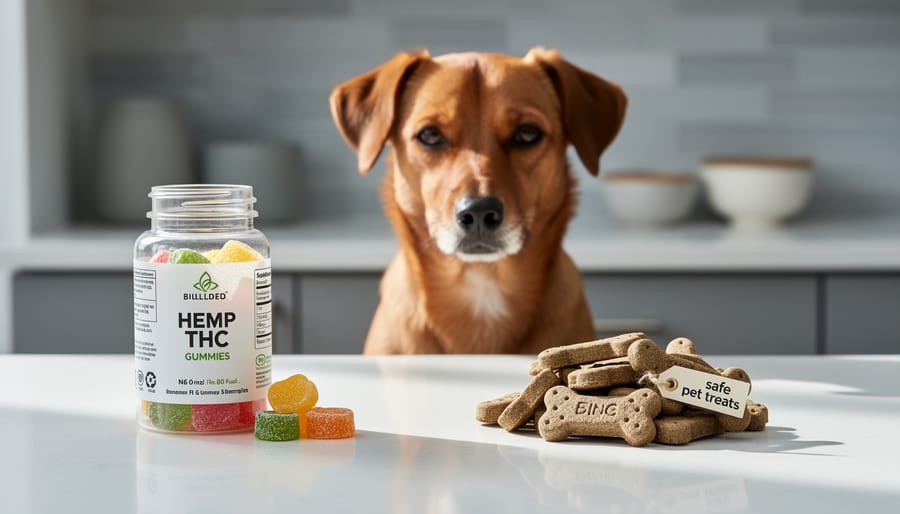
Hemp-derived THC gummies for dogs are not safe and should never be given to your pet, even in small amounts. While products containing THC (including those marketed as “hemp-derived” and federally legal https://www.exhalewell.com/thc-gummies/ for human consumption) might be safe for people, dogs metabolize THC differently than we do, making them far more vulnerable to toxicity at doses that seem harmless by human standards.
If you’ve come across hemp-derived THC products and wondered whether they could help your dog with anxiety, pain, or other conditions, you’re not alone. These products have exploded in popularity for humans, and it’s natural to wonder if they might offer similar benefits for our four-legged family members. The short answer is no, and the reason goes beyond simple dosing concerns.
Dogs have a significantly higher concentration of cannabinoid receptors in their brains compared to humans, particularly in areas that control movement and balance. This means that even small amounts of THC can trigger serious neurological symptoms, including loss of coordination, lethargy, drooling, tremors, and in severe cases, seizures or coma. What might give a person a mild buzz can send a dog to the emergency vet.
This article will walk you through the science behind why THC affects dogs so differently, what the signs of cannabis toxicity look like, what veterinarians in Ottawa and beyond are seeing in their clinics, and most importantly, what safe alternatives exist if you’re looking for natural wellness options for your dog. We’ll keep the explanations clear, grounded in current veterinary medicine, and focused on keeping your best friend healthy and safe.
Understanding Hemp-Derived THC vs. CBD: What’s the Difference for Your Dog?

When you see hemp-derived THC gummies marketed for dogs, you might wonder how they differ from the CBD products you’ve heard about. The distinction is crucial for your dog’s safety, and understanding these compounds can help you make informed decisions about what’s appropriate for your pet.
Both THC and CBD come from cannabis plants, but they affect dogs in fundamentally different ways. CBD, or cannabidiol, is a non-intoxicating compound that interacts with the body’s endocannabinoid system without producing a “high.” THC, or tetrahydrocannabinol, is the primary psychoactive component in cannabis that causes intoxication. While humans might choose THC products for their effects, dogs don’t have the cognitive ability to consent to or understand intoxication, making these products particularly concerning for pets.
- Hemp-Derived THC
- A psychoactive compound extracted from hemp plants containing less than 0.3% THC by dry weight, often concentrated into products like gummies. These products can still contain intoxicating amounts of THC despite coming from “legal” hemp sources.
- CBD (Cannabidiol)
- A non-intoxicating compound from cannabis plants that may offer therapeutic benefits without causing a high or altered mental state in dogs.
- Delta-8 THC
- A semi-synthetic cannabinoid derived from hemp-sourced CBD that produces psychoactive effects similar to Delta-9 THC but is often marketed as a legal alternative.
- Delta-9 THC
- The primary psychoactive compound in marijuana and some hemp products, responsible for the intoxicating effects associated with cannabis use.
- Psychoactive Effects
- Changes to mental state, perception, coordination, and behavior caused by compounds like THC that alter brain function.
- Endocannabinoid System
- A biological system in mammals that regulates various functions including mood, appetite, pain, and immune response through cannabinoid receptors throughout the body and brain.
The hemp-derived THC market has exploded with variants like Delta-8, Delta-9, THC-O, and HHC products. Many are chemically synthesized from CBD through laboratory processes, creating compounds that don’t naturally occur in significant quantities in hemp plants. These products can be just as intoxicating as traditional marijuana products, despite their hemp origins.
In Canada as of 2026, the legal landscape remains complex. While hemp-derived products containing less than 0.3% THC are federally permitted under certain conditions, cannabis products for pets are not approved by Health Canada or the Canadian Food Inspection Agency. This means hemp-derived THC gummies marketed for dogs exist in a regulatory grey zone, with no official oversight ensuring their safety, quality, or appropriate dosing for animals. Similar to Canada pet travel rules that require careful attention to regulations, navigating cannabis products for pets demands understanding both legality and safety concerns.
The key safety distinction comes down to this: CBD products designed for pets typically contain only trace amounts of THC and focus on the non-intoxicating compound, while hemp-derived THC gummies contain enough THC to produce psychoactive effects that can be dangerous for dogs.
The Science Behind THC and Dogs: Why Canines React Differently

Dogs process THC fundamentally differently than humans, and understanding why helps explain the serious safety concerns around these products.
The key difference starts with the endocannabinoid system, the network of receptors that responds to cannabinoids like THC. Both dogs and humans have this system, but dogs possess a significantly higher concentration of cannabinoid receptors (CB1 receptors) in their brains, particularly in the cerebellum and brainstem. These areas control coordination, balance, and vital functions like heart rate and breathing. When THC binds to these abundant receptors, the effects in dogs are dramatically amplified compared to humans.
Research shows dogs have approximately nine times more cannabinoid receptors in their hindbrain than humans. This higher receptor density means even small amounts of THC can trigger intense neurological responses. What might cause mild euphoria in a person can lead to severe incoordination, disorientation, and sedation in a dog.
The toxicity threshold matters too. Studies indicate dogs show clinical signs of THC toxicity at doses as low as 1.5 mg per pound of body weight, though some dogs react to even smaller amounts. A 30-pound dog could potentially experience symptoms from just 45 mg of THC, an amount that might barely affect an adult human. Since hemp-derived THC gummies marketed to humans often contain 10-25 mg per piece, a dog eating just a few could consume a dangerous dose relative to their body weight.
Metabolism differences compound the problem. Dogs metabolize THC more slowly than humans, meaning the compound stays in their system longer. While a person might feel effects for a few hours, a dog’s symptoms can persist for 24 to 72 hours, sometimes longer in severe cases. Their livers also process cannabinoids differently, potentially creating metabolites that intensify side effects.
These physiological differences explain why THC is classified as a toxin for dogs by veterinary toxicology experts. It’s not that dogs have an “allergy” to THC, they’re simply built in a way that makes the compound far more dangerous for them than for us.
Recognizing THC Toxicity in Dogs: Signs Every Ottawa Owner Should Know
Knowing what THC toxicity looks like in dogs can make the difference between a quick response and a life-threatening delay. Dogs metabolize THC differently than humans do, and because they have more cannabinoid receptors concentrated in their brains, even small amounts can trigger noticeable reactions. The severity of symptoms depends on how much THC your dog consumed, their body weight, and individual sensitivity.
The earliest signs of THC intoxication typically appear within 30 to 90 minutes after ingestion. Your dog might seem unusually drowsy or disoriented, stumbling as they walk or struggling to maintain their balance. You’ll likely notice dilated pupils that stay enlarged even in bright light, and excessive drooling or urinary incontinence. Some dogs become extremely sensitive to sound and movement, startling at normal household noises or flinching when you approach them.
As toxicity progresses or if your dog ingested a larger amount, symptoms become more pronounced and concerning:
- Severe loss of coordination or inability to stand without falling
- Vomiting or diarrhea
- Tremors or muscle twitching
- Abnormally slow heart rate (bradycardia) or rapid heart rate (tachycardia)
- Low body temperature (hypothermia)
- Agitation, anxiety, or vocalization (whining, howling)
- Seizures
- Unresponsiveness or extreme lethargy where your dog can’t be roused
- Respiratory depression or difficulty breathing
The most dangerous symptoms requiring immediate emergency veterinary care include seizures, difficulty breathing, loss of consciousness, or a heart rate that seems either dangerously slow or racing. In rare cases involving very high THC doses, dogs can slip into a coma.
Many Ottawa owners describe their dogs as appearing “drunk” during THC intoxication, with a glazed expression and poor body control. Some dogs experience what vets call “static ataxia,” where they stand with their legs splayed wide and rock back and forth while trying to stay upright. Unlike humans who might find THC intoxication uncomfortable but manageable, dogs often appear genuinely distressed and frightened by the loss of control over their bodies.
Time is critical. If you notice any combination of these symptoms and suspect THC exposure, contact your veterinarian or an Ottawa emergency vet clinic immediately, even if symptoms seem mild initially. THC toxicity can worsen rapidly, and early intervention significantly improves outcomes.
What Veterinarians Say: Expert Perspectives on Hemp-Derived THC for Dogs

The veterinary community maintains a clear and cautious position on hemp-derived THC products for dogs. As of 2026, major Canadian veterinary organizations, including the Canadian Veterinary Medical Association, do not recommend THC-containing products for canine use due to significant safety concerns and the absence of rigorous clinical trials establishing safe dosing protocols.
Dr. Sarah Mitchell, a veterinarian practicing in Ottawa for over fifteen years, explains the core issue: “We simply don’t have the research to support THC use in dogs. Unlike CBD, which has been studied more extensively in veterinary medicine, THC products lack the safety data we need to confidently recommend them to pet owners. The risk of toxicity is real, and when we have safer alternatives available, it’s difficult to justify the gamble.”
This sentiment echoes across the profession. Veterinarians point to the fundamental problem of dosing uncertainty. Human THC products are formulated for human body weight and metabolism, not for dogs who process cannabinoids differently. Even products marketed specifically for pets often lack third-party testing, accurate labeling, or veterinary oversight in their development.
The regulatory landscape compounds these concerns. Health Canada does not currently approve THC products for veterinary use, meaning these products exist in a legal and scientific grey area. Without regulatory standards, product quality varies wildly. Contamination with higher THC levels than labeled, inconsistent potency between batches, and the presence of other compounds have all been documented issues in the broader cannabis pet product market.
Veterinarians also emphasize that unlike controlled pharmaceutical medications, hemp-derived THC products come with no safety studies specific to dogs, no established therapeutic index, and no clear understanding of long-term effects. Dr. James Chen, an emergency veterinarian at an Ottawa animal hospital, notes: “We see dogs come in with THC toxicity regularly. What concerns me most is when owners have intentionally given THC products thinking they’re helping, only to end up with a very sick pet.”
The professional consensus is straightforward. When clients ask about cannabis products for their dogs, vets consistently recommend starting with veterinary-formulated CBD products that have been tested for safety and purity. These products offer potential wellness benefits without the psychoactive effects and toxicity risks associated with THC. Most importantly, any cannabis product should only be used under veterinary guidance, with proper monitoring and as part of a comprehensive treatment plan tailored to your dog’s specific health needs.
Comparing Hemp-Derived THC to CBD for Dog Wellness
When Ottawa dog owners compare hemp-derived THC products to CBD options for their pets, the differences become stark. While both compounds come from cannabis plants, their safety profiles and evidence bases differ dramatically when it comes to canine wellness.
| Factor | Hemp-Derived THC | CBD for Dogs |
|---|---|---|
| Safety Profile | High toxicity risk; dogs extremely sensitive | Generally well-tolerated with minimal side effects |
| Psychoactive Effects | Yes, causes intoxication and distress | No, non-intoxicating |
| Veterinary Support | Discouraged by most veterinarians | Increasingly recommended for specific conditions |
| Research Backing | Virtually none for canine use | Growing body of studies on efficacy and safety |
| Legal Status (Canada) | Unregulated; not approved for pets | Legal; some products veterinary-formulated |
For common dog health concerns like anxiety, the evidence strongly favours CBD for pets as the safer first-line approach. CBD interacts with your dog’s endocannabinoid system to promote calm without the intoxicating effects that make THC so problematic. Studies from veterinary colleges have shown CBD can reduce anxiety-related behaviors in dogs with minimal side effects, typically limited to mild drowsiness or temporary digestive upset at higher doses.
When it comes to pain management and inflammation, CBD again offers a safer profile. Research suggests CBD has anti-inflammatory properties that may help dogs with arthritis or joint pain, and Ottawa veterinarians can discuss appropriate dosing for your pet’s specific needs. Hemp-derived THC, by contrast, carries the risk of toxicity before reaching any therapeutic benefit, and we simply don’t have research establishing safe or effective doses for dogs.
Could there theoretically be conditions where THC might offer benefits CBD doesn’t? Some researchers speculate about severe, treatment-resistant cases, but this remains purely hypothetical. No controlled studies have identified conditions in dogs where THC’s risks would be justified over existing treatments. The lack of research means we’re essentially experimenting on our pets if we choose THC products.
The practical reality for Ottawa dog owners is straightforward: CBD products formulated specifically for dogs offer a research-backed, veterinary-supported option for wellness support. Hemp-derived THC gummies, whether human-marketed or pet-marketed, carry significant risks without proven benefits. Your veterinarian can guide you toward quality CBD products if supplementation seems appropriate for your dog’s specific health concerns.
What to Do If Your Dog Accidentally Consumes THC Gummies
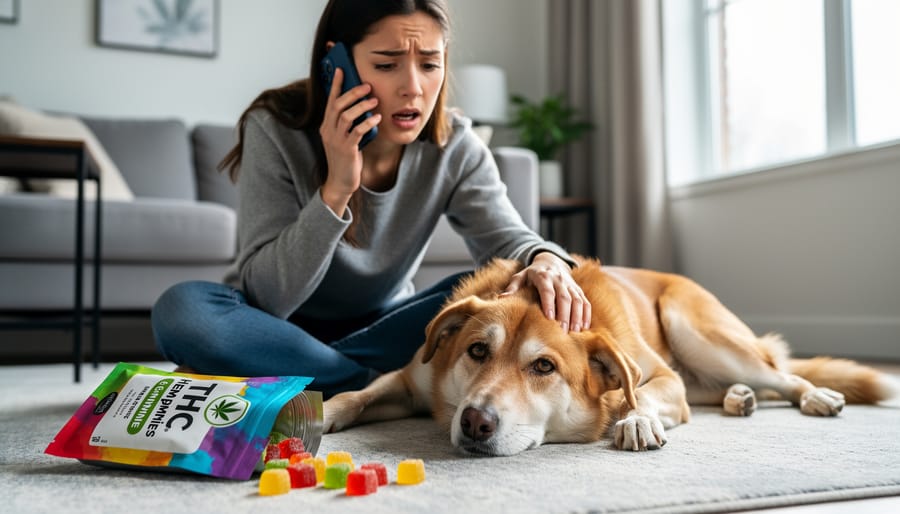
Discovering your dog has eaten THC gummies can be frightening, but staying calm and acting quickly makes a real difference in outcome. Here’s exactly what to do.
Immediate Steps:
First, secure any remaining gummies away from your pet and note approximately how many are missing. Check the product label for THC content per gummy. Time matters with THC ingestion, so don’t wait to see if symptoms develop before taking action.
Call your veterinarian or an emergency animal hospital immediately, even if your dog seems fine. THC toxicity symptoms can appear within 30 to 90 minutes but sometimes take up to three hours. The veterinarians at Ottawa Veterinary Hospital (613-745-8880) and Alta Vista Animal Hospital (613-731-7338) can advise whether your dog needs emergency treatment based on the amount ingested and your pet’s size.
For after-hours emergencies, Ottawa Animal Emergency and Specialty Hospital (613-745-0123) on Hunt Club Road East provides 24-hour care. Have your dog’s weight, the estimated number of gummies consumed, the THC concentration per gummy, and the time of ingestion ready when you call.
What NOT to Do:
Do not induce vomiting unless specifically instructed by a veterinarian. Do not give your dog any home remedies, activated charcoal, or medications without veterinary guidance. These can sometimes cause additional complications or interfere with treatment.
Never adopt a “wait and see” approach with THC ingestion. While some dogs experience mild symptoms, others develop severe reactions requiring hospitalization. Dogs cannot metabolize THC the way humans do, and what seems like a small amount to you can cause serious toxicity in your pet.
If your regular vet isn’t available, go directly to an emergency clinic. THC toxicity is treatable, especially when addressed promptly. Your quick response could prevent a minor incident from becoming a life-threatening emergency.
Safer Alternatives: Evidence-Based Options for Dog Anxiety and Pain
If you’re concerned about THC risks but want to help your dog with anxiety or pain, you have several evidence-based options that veterinarians actually recommend. These alternatives have research behind them, established safety profiles, and won’t put your pet at risk of toxicity.
Veterinary-Approved CBD Products
CBD products formulated specifically for dogs remain the most popular supplement option among Ottawa pet owners. Unlike THC, CBD doesn’t produce intoxication and has a much wider safety margin. Look for products from companies that provide third-party lab testing, use organic hemp, and clearly list CBD content per dose. Your Ottawa vet can recommend specific brands they trust and help determine appropriate dosing for your dog’s size and condition. Remember that not all CBD products are created equal, human products often contain ingredients unsafe for dogs, and quality varies dramatically between brands.
Evidence-Based Alternatives Worth Considering
When managing your dog’s anxiety, pain, or other health concerns, proven options include:
- Prescription anxiety medications like fluoxetine or trazodone for dogs with diagnosed anxiety disorders
- Behavioral modification through positive reinforcement training for anxiety which addresses root causes rather than just symptoms
- Environmental enrichment such as puzzle toys and food-dispensing toys that reduce stress through mental stimulation
- Pheromone diffusers like Adaptil that release calming scents mimicking a mother dog’s nursing pheromones
- NSAIDs or other pain medications prescribed by your vet for inflammatory conditions
- Gradual desensitization protocols for dogs dealing with social stress or specific triggers
- Physical therapy and acupuncture for chronic pain management
The Importance of Professional Guidance
Before starting any supplement, medication, or behavioral program, book a consultation with your Ottawa veterinarian. They can diagnose underlying issues, rule out medical causes of behavioral problems, and create a comprehensive treatment plan tailored to your dog’s specific needs. What works for one anxious dog might not work for another, and combining approaches often yields better results than any single intervention alone.
The Bottom Line: Making Informed Decisions for Your Dog’s Health
When it comes to hemp-derived THC gummies and your dog, the evidence is clear: these products carry significant risks that far outweigh any theoretical benefits. Dogs’ unique sensitivity to THC, combined with the complete absence of peer-reviewed research on safe dosing for canines, makes these products a gamble with your pet’s health.
The lack of regulatory oversight in the pet supplement industry means you can’t rely on product labels for accurate THC content or safety information. What works for humans simply doesn’t translate to dogs, whose cannabinoid receptors and metabolism function fundamentally differently. The veterinary community’s consensus remains consistent: until substantial research proves otherwise, hemp-derived THC products should be avoided for dogs.
Your dog depends on you to make safe choices on their behalf. If you’re exploring cannabis-derived products for anxiety, pain, or other health concerns, start the conversation with your veterinarian. Ottawa has excellent veterinary professionals who can guide you toward evidence-based treatments, including CBD products specifically formulated for pets when appropriate.
Remember that marketing doesn’t equal safety. Just because hemp-derived THC gummies are available for purchase doesn’t mean they’ve been tested, proven effective, or deemed safe for canine use. Your dog’s wellbeing is worth more than experimentation with unregulated products.
The safest path forward involves three steps: consult your vet first, consider proven alternatives like veterinary-approved CBD or conventional treatments, and always prioritize your dog’s safety over trends. When in doubt, the answer is simple: if you’re not certain it’s safe, don’t give it to your dog.