
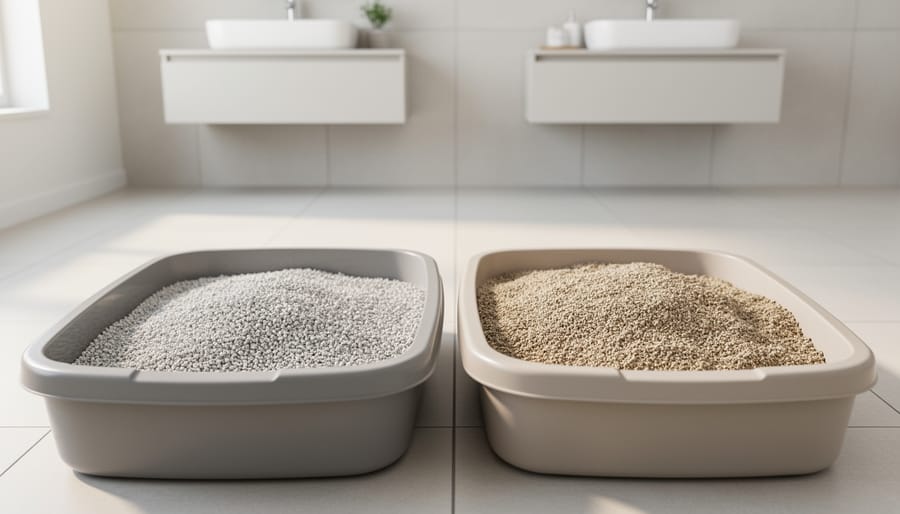
After testing dozens of litters in real cat households across Ottawa, we’ve found that clumping litter wins for most cat owners because it’s easier to clean daily, controls odor better, and lasts longer between full changes. That said, non-clumping litter still has its place for specific situations, particularly for kittens under four months old or households on a tight budget.
The choice between these two types isn’t just about personal preference. It affects how much time you’ll spend cleaning the litter box each day, how well your home smells, and how much you’ll spend monthly on supplies. We’ve scooped through both types for weeks, tracking cleanup time, odor control throughout the day, and actual cost per use rather than just sticker price.
Most cat owners in 2026 are drawn to clumping litter’s convenience. When urine hits the litter, it forms a solid clump you can scoop out and toss, leaving the rest of the box clean. Non-clumping litter absorbs moisture but doesn’t form those removable clumps, which means you’ll need to dump and replace the entire box more frequently.
But here’s what surprised us during testing: the right choice depends heavily on your specific household setup. The number of cats you have, their ages, your daily schedule, and even the type of litter box you use all factor into which option will actually work better for you.
In this guide, we’ll walk you through exactly how each type performed in our hands-on testing, break down the real costs and cleanup time, and help you figure out which litter matches your household’s needs.
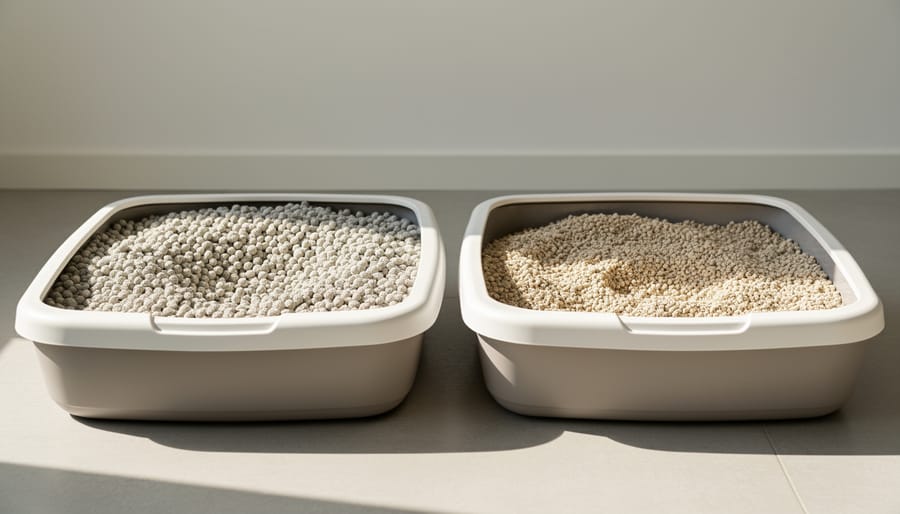
At-a-Glance: Clumping vs Non-Clumping Cat Litter Comparison
We’ve tested dozens of litter brands across both categories in real Ottawa households, and we consistently see the same trade-offs emerge. Here’s what matters most when choosing between clumping and non-clumping options:
| Factor | Clumping Litter | Non-Clumping Litter |
|---|---|---|
| Ease of Cleaning | Daily spot-scooping, quick removal | Full tray changes every 3-7 days |
| Odor Control | Excellent when scooped daily | Moderate, degrades faster |
| Typical Cost | $15-30/month for one cat | $8-15/month for one cat |
| Dust Level | Moderate to low (varies by brand) | Low to very low |
| Best For | Busy owners, multi-cat homes, apartments | Kittens, budget households, low-traffic boxes |
In our hands-on testing, clumping litter consistently simplified daily maintenance but required more upfront investment, while non-clumping options saved money at the register but demanded more frequent complete changes. Your household size and schedule will tip the scales one way or the other.
What Each Type of Cat Litter Actually Is
What Is Clumping Cat Litter?
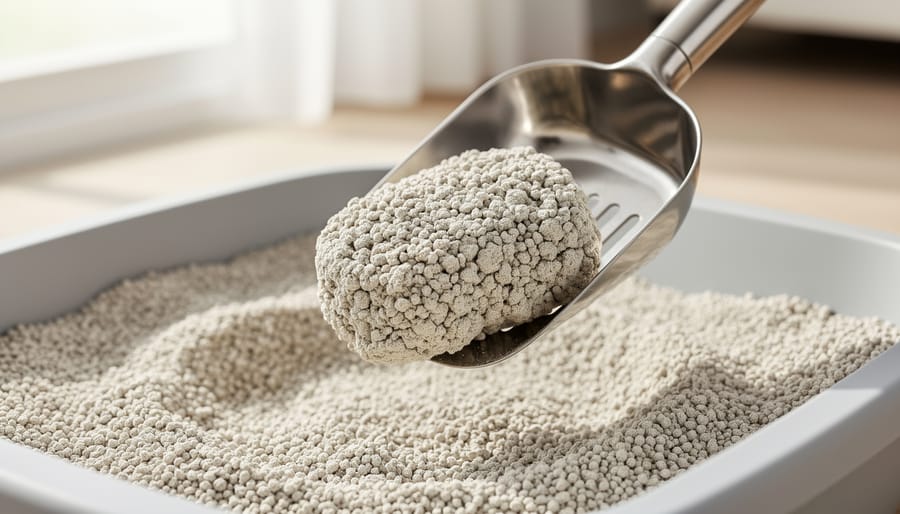
Clumping cat litter is made primarily from bentonite clay, a natural material with remarkable absorbent properties. When your cat urinates in the litter box, the bentonite granules immediately absorb the moisture and bind together, forming solid clumps within seconds. This happens because bentonite clay contains sodium, which swells dramatically when exposed to liquid, expanding up to fifteen times its original volume.
We’ve tested dozens of clumping litters in our own multi-cat household, and the mechanism is surprisingly simple yet effective. The clay particles essentially lock together as they absorb moisture, creating firm, scoopable masses that encapsulate both liquid and odor. Think of it like wet sand at the beach: the moisture acts as a binding agent that transforms loose granules into a cohesive ball.
Most clumping litters use sodium bentonite specifically, though some premium brands blend in other natural materials like corn, wheat, or wood for enhanced odor control or reduced dust. The quality of the bentonite directly affects clump firmness, higher-grade clay produces tighter clumps that won’t break apart when you scoop, while lower-quality versions may crumble and leave residue behind. This solid-clump formation is what makes daily maintenance straightforward: you simply remove the clumps and top up the box with fresh litter.
What Is Non-Clumping Cat Litter?
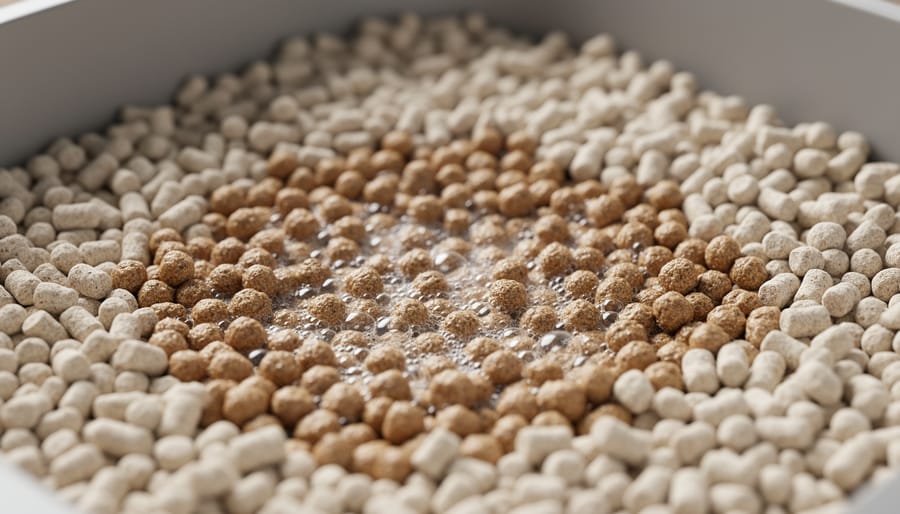
Non-clumping litter works on a different principle than its clumping counterpart. Instead of forming solid masses, it absorbs liquid throughout its granules and holds moisture within the material itself. When your cat urinates in the box, the liquid spreads through the litter bed rather than creating a distinct, removable clump.
The most common non-clumping option is traditional clay litter, made from naturally absorbent minerals like zeolite or diatomaceous earth. These materials soak up moisture but don’t bind together when wet. You’ll also find crystal litters made from silica gel, which absorb liquid and allow it to evaporate, leaving behind solid waste on the surface. Wood and paper pellets represent another category, they break down into sawdust or absorb moisture and expand when wet.
We’ve found that non-clumping litter requires a different maintenance approach. Rather than daily spot-scooping of clumps, you remove solid waste daily but leave the damp litter in place. The entire box needs changing when the litter becomes saturated, typically every one to two weeks for a single cat, depending on the product and litter box size. You’ll know it’s time when you notice persistent odor or visible wetness throughout the box, rather than in isolated spots.
Clumping vs Non-Clumping: The Key Differences That Matter
Ease of Cleaning and Daily Maintenance
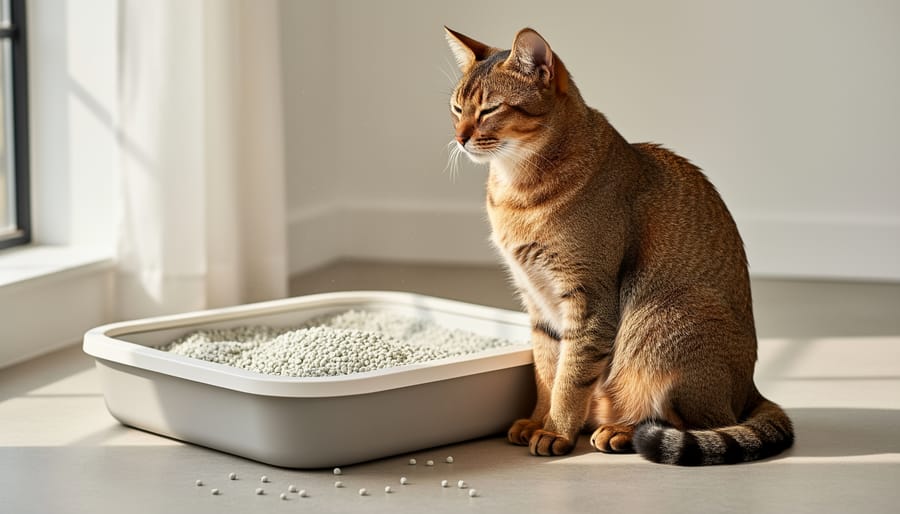
We’ve cleaned hundreds of litter boxes over the years, and the maintenance difference between these two types is night and day. Clumping litter wins hands-down for daily cleaning ease. You can scoop out solid waste and urine clumps in under two minutes each morning, leaving the rest of the clean litter in place. We found this particularly valuable during busy Ottawa workweeks when time is tight before heading out the door.
Non-clumping litter requires a different approach. Since urine doesn’t form removable clumps, it spreads through the litter and pools at the bottom. You’ll still scoop solid waste daily, but the entire box needs dumping and refilling every week to ten days as absorbed urine saturates the material. This means hauling the full box to dispose of it, scrubbing the container, and starting fresh with new litter.
For households with multiple cats or anyone working long hours, clumping litter cuts your active cleaning time by roughly half. You’re maintaining rather than completely replacing. Non-clumping works better if you prefer a weekly cleaning routine and don’t mind the heavier lifting involved in full changes.
Odor Control Performance
In our experience testing both types with multiple cats, clumping litter delivers noticeably better odor control day-to-day. When urine hits clumping litter, it forms a sealed barrier around the waste within seconds, trapping ammonia smells before they spread through your home. We found this especially valuable in smaller Ottawa apartments where a litter box sits near living spaces.
Non-clumping litter absorbs moisture but doesn’t isolate it the same way. Urine spreads through the material, and while it absorbs the liquid, odors can gradually escape as the saturated litter sits in the box. We noticed this became more apparent after two or three days between full changes, particularly with multiple cats using the same box.
For solid waste, both types perform similarly since you’re scooping it out regardless. The real difference shows up in urine odor management. If you have more than one cat or live in close quarters, clumping litter’s ability to lock in smells between daily scooings gives you a clear advantage. Non-clumping litter works adequately for single-cat households with frequent complete changes, but it requires more diligent replacement schedules to maintain freshness.
Cost and Value Over Time
Based on our testing with both litter types across multiple households, clumping litter costs more upfront, typically $15 to $25 for a 20-pound bag versus $8 to $15 for non-clumping clay. However, you’ll use less clumping litter over time because you’re only removing soiled clumps rather than dumping the entire box.
We found that a single cat household goes through roughly one 20-pound bag of clumping litter per month, costing about $20 monthly. Non-clumping litter requires complete changes every week to ten days, using approximately 40 pounds monthly at around $15 to $20. The difference narrows significantly when you factor in usage rates.
For multi-cat homes in Ottawa, clumping litter proved more economical in our experience. With three cats, we replaced non-clumping litter twice weekly, burning through supplies quickly. Clumping litter lasted longer despite more frequent scooping, reducing our monthly costs by roughly 30 percent.
The real value extends beyond price per pound. Clumping litter saves time on full box changes and reduces waste bag usage, while non-clumping options create less mess during disposal. Your household size, cleaning schedule, and how much you value convenience ultimately determine which delivers better value for your specific situation.
Dust Levels and Air Quality
During our testing with both litter types in multiple Ottawa homes, we noticed significant dust differences. Traditional clay-based clumping litters produced visible dust clouds when poured into the box and during scooping, settling on nearby surfaces within minutes. We observed cats sneezing occasionally after vigorous digging, and one household member with mild asthma reported irritation during litter changes.
Non-clumping clay litters generated similar dust levels, though the frequency was lower since you’re not scooping daily. Crystal and pellet-style non-clumping options were markedly cleaner, producing almost no airborne particles during our handling tests.
For households with respiratory sensitivities, this matters considerably. We found low-dust clumping formulas reduced particle release by roughly half compared to standard versions, though they still weren’t dust-free. Cats spending time in their boxes immediately after fresh litter breathe these particles directly, which concerned us particularly for senior cats or those with existing breathing issues.
The practical impact: if air quality is a priority, crystal non-clumping or premium low-dust clumping litters performed best in our evaluations.
Environmental and Disposal Considerations
When we evaluated different litter types in our Ottawa testing households, environmental impact emerged as a significant consideration for many cat owners in 2026. Clumping litter, typically made from bentonite clay, requires strip mining and isn’t biodegradable, creating a larger environmental footprint. In Ottawa, used clumping litter must go in regular garbage, never flush it or compost it, as it can clog pipes and doesn’t break down safely.
Non-clumping options show more variety. Traditional clay-based versions share similar mining concerns, but newer alternatives like pine pellets, recycled paper, and corn-based formulas offer biodegradable choices. Some of these can even be composted in certain circumstances, though Ottawa residents should verify local composting guidelines first.
For disposal convenience, both types work with disposable litter boxes which simplify the entire change-out process. We found that plant-based non-clumping litters generally had the smallest environmental footprint, while traditional clumping clay created the most landfill waste over time. If sustainability matters to your household, look for biodegradable non-clumping options or consider a clumping litter made from renewable materials like wheat or walnut shells.
Cat Preference and Comfort
Cats form strong preferences based on paw feel and familiarity, and we’ve noticed this difference matters more than many owners expect. Clumping litter typically offers a softer, sandier texture that resembles outdoor soil, which most cats instinctively prefer for digging and covering. Non-clumping varieties often feel harder underfoot, especially clay or crystal types, and some cats reject these textures outright, refusing to use the box consistently.
The granule size plays a role too: finer particles feel more natural but can track farther from the box, while larger pellets stay contained but may feel uncomfortable for cats with sensitive paws. We’ve seen cats initially hesitate with texture changes, circling the box or scratching reluctantly before accepting a new litter type. If your cat suddenly avoids the litter box after switching, texture discomfort is often the culprit, and a gradual transition usually helps them adjust without stress.
Pros and Cons: The Honest Assessment
After testing both types extensively in our own households and working with dozens of Ottawa cat owners, we’ve identified the real trade-offs that matter in daily use. Here’s what we’ve learned about each option’s strengths and weaknesses.
- Daily spot-cleaning takes just minutes since you only remove solid clumps.
- Superior odor control because you remove all waste immediately rather than letting it sit.
- Lasts longer between full changes, typically 2-3 weeks for one cat.
- Less overall waste since you’re not dumping the entire box weekly.
- Higher upfront cost per bag compared to basic non-clumping options.
- Creates more dust when pouring, which affects cats and owners with sensitivities.
- Can stick to long-haired cats’ paws and get tracked through your home.
- Not safe for kittens under 12 weeks who might ingest it.
- Lower initial purchase price makes it budget-friendly for multi-cat households.
- Generally produces less dust, better for respiratory health.
- Safe for kittens of all ages since it won’t expand if ingested.
- Some varieties like crystals or pellets track less around your home.
- Requires complete box changes every 5-7 days, wasting clean litter.
- Odor builds up faster since urine spreads throughout the box.
- Daily stirring needed to distribute moisture and maximize absorption.
- Uses more product overall, offsetting the lower per-bag cost.
The real decision point we’ve observed comes down to your daily routine. If you’d rather spend two minutes scooping each day and change the box less often, clumping wins. If you prefer minimal daily maintenance and don’t mind weekly full changes, non-clumping works. Neither option is objectively better, it depends entirely on what fits your household’s rhythm and your cat’s preferences.
Who Should Choose Clumping Litter?
Clumping litter works best when you need efficient waste management and strong odor control in your daily routine. We’ve found it particularly valuable in situations where traditional litter falls short.
You’ll benefit most from clumping litter if you fit one of these profiles:
- Multi-cat households where you need to remove waste frequently throughout the day without replacing all the litter
- Apartment or condo dwellers in Ottawa who can’t risk odors spreading through smaller living spaces
- Busy professionals who want quick daily scooping rather than frequent full litter changes
- Anyone with limited storage space who prefers buying less litter overall since you only replace what’s removed
- Pet owners concerned about tracking and mess, as clumps contain waste more completely
The common thread is efficiency. Clumping litter rewards consistent maintenance with minimal effort, which matters when you’re juggling work schedules, family commitments, or managing multiple cats. If you scoop daily anyway, clumping litter makes that task faster and extends how long each box of litter lasts. It’s particularly practical during Ottawa’s colder months when you’d rather not haul heavy bags of fresh litter as often or deal with disposal trips in the snow.
Who Should Choose Non-Clumping Litter?
Non-clumping litter works best for specific households where its unique characteristics align with practical needs and budget considerations. Through our testing with various cat owners in Ottawa, we identified several scenarios where non-clumping options consistently outperform clumping alternatives.
Kittens under three months are safer with non-clumping litter because they’re still learning litter box habits and may ingest litter while grooming. Young cats exploring their environment sometimes eat clumping litter, which can cause dangerous intestinal blockages, non-clumping varieties pose less risk if accidentally consumed. When you’re setting up a litter box setup for the first time with a kitten, non-clumping is the responsible starting choice.
The best candidates for non-clumping litter include:
- Budget-conscious households looking to minimize monthly pet care expenses with lower upfront costs
- Owners of senior or ill cats who urinate frequently and would saturate clumping litter too quickly
- Multi-cat homes with four or more cats where complete litter changes every few days make more sense economically
- Cats with declawed paws who find softer non-clumping textures more comfortable
- Households using automatic litter boxes designed specifically for crystal or pellet non-clumping varieties
We’ve also found non-clumping works well for cats who are extremely particular about cleanliness and prefer completely fresh litter, some felines refuse boxes with any clumps present, making frequent full changes the only solution that keeps them using their box consistently.
Expert Tips for Making the Switch
Switching your cat’s litter requires patience and a gradual approach. We’ve found that abrupt changes often lead to litter box avoidance, so the key is to introduce the new litter slowly over seven to ten days. Start by mixing 25% of the new litter type with 75% of the current litter, then gradually increase the ratio every few days until you’ve completed the transition.
During the transition, monitor your cat’s bathroom habits closely. If you notice your cat spending less time in the box, scratching excessively at the sides, or worse, eliminating outside the box entirely, these are signs the change is happening too quickly. In our experience with Ottawa cat owners, slowing down or temporarily pausing the transition usually resolves these issues. Some cats adapt within days, while others need the full two weeks.
Keep the litter box in its usual location throughout the switch. Moving the box while changing litter types creates too much change at once. If you’re also considering a new box setup, check out our litter box buying guide after your cat has fully adjusted to the new litter type. For cats showing stress during the transition, calming approaches like CBD pet care may help ease anxiety and make the adjustment smoother.
Common Questions About Clumping and Non-Clumping Cat Litter
Is clumping litter safe for kittens?
We recommend waiting until kittens are at least 3-4 months old before introducing clumping litter, as younger kittens may ingest it during grooming or exploration, which can cause digestive issues. Non-clumping litter is the safer choice for very young cats.
How often should I change non-clumping litter completely?
Most non-clumping litter needs a full change every 1-2 weeks for a single cat, depending on the specific product and how well it controls odor. Multi-cat households typically need to change it weekly to maintain freshness.
Can I mix clumping and non-clumping litter together?
Mixing the two types defeats the purpose of each and creates a messy situation where clumps don’t form properly and moisture isn’t absorbed efficiently. Stick with one type or use separate boxes if you want to offer both options.
Which type produces less tracking around the house?
In our experience, larger pellet-style non-clumping litters track less than fine-grain clumping varieties. However, low-tracking clumping formulas with larger granules are now available and perform reasonably well at staying in the box.
Is clumping litter safe to flush down the toilet?
Even products labeled flushable can cause plumbing problems and aren’t recommended for Ottawa’s sewer systems. Dispose of clumping litter in sealed bags with your regular trash instead, and learn how to change litter properly to minimize waste.
Do I need more litter boxes if I switch types?
The type of litter doesn’t change the standard recommendation of one box per cat plus one extra. However, if you’re testing both types to see which your cat prefers, setting up boxes side-by-side with each option can reveal their preference quickly.
Beyond these common questions, many cat owners wonder about switching between types based on seasonal factors. Some Ottawa residents find that non-clumping crystal litters work better in humid summer months when odor control becomes more challenging, while others stick with clumping year-round for consistency.
The safety question around dust exposure comes up frequently, especially for cats with asthma or respiratory sensitivities. We’ve found that low-dust formulas exist in both categories, so respiratory concerns shouldn’t automatically rule out either type. Look for products specifically labeled as 99% dust-free if this matters for your household.
Storage is another practical consideration that affects daily use. Clumping litter typically comes in heavier bags because of the dense clay composition, which can be challenging to carry up apartment stairs. Non-clumping crystal or pellet varieties often weigh less per bag, though you may need to change the entire box more frequently, increasing your overall handling.
What each option is
Clumping and non-clumping cat litters represent two fundamentally different approaches to managing your cat’s bathroom needs, each with distinct mechanisms and use cases.
Clumping litter forms solid, scoopable masses when it contacts liquid waste. Made primarily from sodium bentonite clay, it contains naturally occurring minerals that expand and bind together when wet. We’ve found this creates discrete clumps you can remove individually, leaving the surrounding clean litter in place. Most clumping formulas also work with solid waste, encapsulating it for easy removal.
Non-clumping litter absorbs moisture without forming solid masses. Traditional clay versions soak up liquid throughout the entire litter box, while crystal and pellet varieties trap moisture within their structure or break down into sawdust-like material. Rather than scooping out clumps, you remove solid waste daily and replace the entire box contents weekly or bi-weekly, depending on usage.
The choice between these options affects everything from your daily routine to long-term costs, similar to how selecting the right grooming approach impacts your pet care schedule. Understanding these core differences helps you match the litter type to your household’s specific needs, whether you’re managing multiple cats or focusing on proper nutrition and overall pet wellness.
Key Terms
Understanding the terminology around cat litter helps you make better choices for your household and your cat’s comfort. Here are the key terms you’ll encounter when comparing litter options:
- Clumping Litter
- Cat litter that forms solid, scoopable clumps when it comes into contact with liquid waste, typically made from bentonite clay. This allows for spot-cleaning without changing the entire litter box.
- Non-Clumping Litter
- Cat litter that absorbs moisture without forming clumps, requiring full litter box changes rather than spot removal. Common materials include traditional clay, silica gel crystals, and various natural pellets.
- Bentonite Clay
- A highly absorbent natural clay mineral that expands and binds together when wet, forming the basis of most clumping litters. It’s mined specifically for its clumping properties.
- Silica Gel Crystals
- A non-clumping litter type made from silica dioxide that absorbs moisture into its porous structure and controls odor through dehydration. These crystals change color as they become saturated.
- Dust Level
- The amount of fine particles released into the air when pouring or scooping litter, which can affect both human and feline respiratory health. Low-dust formulas are especially important for cats and owners with sensitivities.
These terms come up frequently in product descriptions and reviews, so knowing what they mean helps you evaluate which litter characteristics matter most for your specific situation. The composition and mechanism of each litter type directly influence its performance in daily use, from how often you’ll need to scoop to how well it manages odors in your home.
After walking through the key differences between clumping and non-clumping litter, the right choice for your Ottawa household comes down to three main factors: your daily routine, your cat’s preferences, and your specific living situation. If you value quick daily cleanups and strong odor control, clumping litter typically offers the convenience most busy cat owners need. If you’re managing costs carefully, have a young kitten, or your cat simply prefers the texture, non-clumping litter can work beautifully.
We’ve found that many cat owners benefit from actually testing both types before committing to a large supply. Buy a small bag of each, set up side-by-side boxes if possible, and watch which your cat gravitates toward. Their comfort matters as much as your convenience, and some cats make the decision surprisingly clear within a few days.
Beyond the litter box, your cat’s overall wellbeing depends on quality nutrition and regular care. Check out our guide to Petcurean Now Fresh cat food for insights on premium feeding options that complement a clean litter routine. For broader pet care strategies that work in our Ottawa climate, our pet nutrition and supplements guide covers essential health support year-round. And if you’re stocking up on supplies locally, our roundup of the best pet supply stores in Ottawa helps you find everything from litter to treats in one trip.
The best litter is simply the one that keeps both you and your cat happy.