
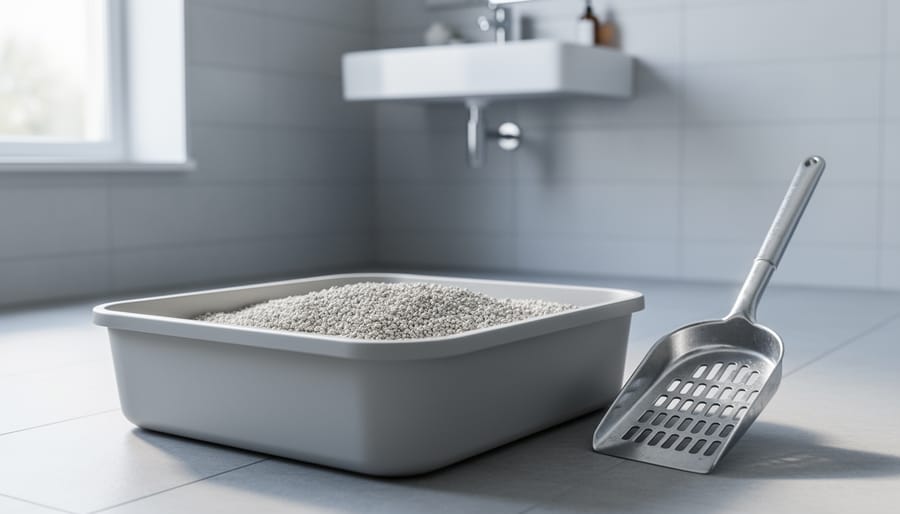
Cleaning your cat’s litter box requires just 2-3 minutes of daily scooping and a thorough 10-minute deep clean every week or two. The process is straightforward: remove waste daily with a sturdy scoop, then wash the entire box with hot water and mild dish soap during your weekly refresh. This routine keeps odors under control, protects your cat’s health, and extends the life of your litter box.
Regular litter box maintenance matters more than most cat owners realize. A dirty box can lead to behavioral problems like inappropriate elimination, and it creates a breeding ground for bacteria and parasites that affect both pets and people. Many Ottawa cat owners struggle with persistent odors or messy cleanup simply because they lack a clear system for both daily upkeep and deeper sanitization.
The good news? You don’t need expensive specialized products or complicated techniques. With basic supplies you already have at home, a hot water rinse, baking soda, or white vinegar for stubborn stains, you can maintain a fresh, hygienic litter box that keeps your cat happy and your home smelling clean. This guide walks you through everything from choosing the right scoop to troubleshooting common problems like tracking and lingering smells.
Why Regular Litter Box Cleaning Matters
A clean litter box isn’t just about keeping your home pleasant, it’s foundational to your cat’s health and happiness. When waste sits too long, ammonia from urine builds up and irritates your cat’s respiratory system, much like how you wouldn’t want your dog breathing in soiled bedding. Cats with compromised immune systems or existing respiratory conditions face even greater risk from prolonged exposure to dirty litter.
Beyond health, there’s behavior. Cats are fastidious creatures. A box that smells or feels unsanitary to them triggers avoidance, leading to accidents outside the box or stress-related issues like excessive grooming. If you’ve trained a dog to go outside in all weather, you know animals have strong bathroom preferences, cats simply express theirs by refusing a filthy box.
Then there’s your household. Neglected litter boxes become odor factories that permeate furniture, carpets, and clothing. Once ammonia smell embeds itself in your home, it’s remarkably difficult to eliminate. Regular cleaning stops odor at the source rather than masking it later.
For Ottawa households juggling both dogs and cats, the same wellness principles apply: clean environments prevent illness, reduce stress, and make life better for everyone under one roof. A few minutes of daily maintenance protects your cat’s urinary tract, preserves your indoor air quality, and prevents the behavioral headaches that come when a cat decides the litter box isn’t worth using anymore.
What You’ll Need for Litter Box Cleaning
You’ll need two sets of supplies: everyday items for quick scooping and a deeper toolkit for your weekly wash. Most of these are probably already in your home, and the rest you can pick up at any Ottawa pet store or grocery chain.
For Daily Maintenance:
- A sturdy litter scoop with slotted holes to sift out clumps while leaving clean litter behind
- Fresh replacement litter to top up what you remove each day
- Baking soda (optional) to sprinkle on top of fresh litter for odor control
- A small waste bin or bag near the box for quick disposal
For Deep Cleaning (Weekly or Biweekly):
- Hot water, your most effective cleaning agent, no harsh chemicals needed
- Dish soap (a small amount) to loosen stubborn dirt on the box’s interior
- White vinegar or hydrogen peroxide (a splash in hot water) to tackle lingering bacteria or smells
- Paper towels for drying the box completely before refilling
- Disposable gloves to protect your hands during the process
- A designated cleaning area, ideally outdoors or in a utility sink away from food prep spaces
Ottawa pet owners can find litter scoops, litter and baking soda at stores like Global Pet Foods on Bank Street, PetSmart locations across the city, or even Loblaws and Metro grocery stores. Vinegar, dish soap and paper towels are household staples you likely already have under the sink. If you’re ordering online, most items arrive within a day or two through local retailers, so you can start a proper cleaning routine right away without waiting.
Safety First: What to Avoid When Cleaning
Before you start cleaning, understand a few important safety rules that protect both you and your cat. Many well-meaning pet owners reach for strong cleaners, but harsh chemicals can do more harm than good.
Skip the bleach, ammonia-based products, and other aggressive household cleaners. Cats have a far more sensitive sense of smell than humans, and residue from strong chemicals can irritate their respiratory system or even poison them if they ingest traces while grooming their paws. Hot water alone is usually enough to clean a litter box thoroughly. If you need extra cleaning power for stubborn odor or buildup, stick to mild dish soap, white vinegar, or hydrogen peroxide, all safe in small amounts when rinsed well. When in doubt, avoid toxic cleaning products entirely and rely on hot water and elbow grease.
Never mix cleaning agents, vinegar and hydrogen peroxide together, or any cleaner with bleach, because the chemical reactions can release toxic fumes. Always wear disposable gloves during cleaning to protect your hands from bacteria, and wash your hands thoroughly with soap and warm water when you finish, even if you wore gloves. Set up your cleaning area in a well-ventilated space, preferably outdoors or in a bathroom with the fan running, so fumes dissipate quickly and you are not breathing in dust or moisture.
These simple precautions keep litter box maintenance safe for everyone in your Ottawa household, whether you have dogs, cats, or both.
Daily Maintenance: The Quick Scoop Method
How Often to Scoop
Scoop your cat’s litter box at least once daily. That’s the minimum for a single-cat household and keeps waste from piling up, which controls odor and encourages your cat to keep using the box. If you have multiple cats, scoop twice a day or even more often. Each cat adds to the mess, and a crowded box fills faster. More frequent scooping means less smell, a cleaner environment, and happier cats. Many Ottawa multi-pet households with both dogs and cats find that a morning and evening scoop routine works well, especially when integrated into the same schedule as walking the dog. Consistent daily removal of clumps prevents ammonia buildup and reduces the need for emergency deep cleans.
Replacing Removed Litter
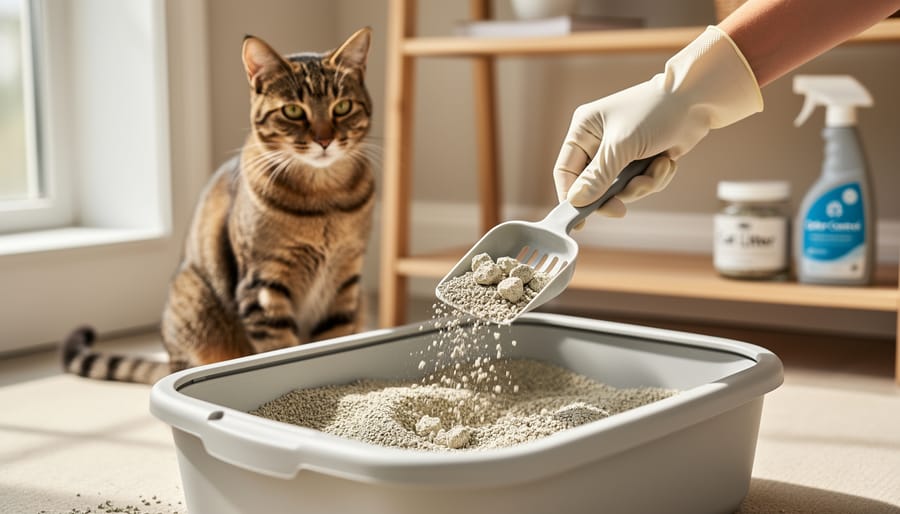
After scooping out the clumps and waste, you’ll notice the litter level has dropped. Top it up by adding enough fresh litter to restore the original depth, usually two to three inches for most boxes. This maintains good absorption and gives your cat a comfortable layer to dig in.
If odor is a concern, sprinkle a thin layer of baking soda over the fresh litter before mixing it in gently. Baking soda is safe for cats and neutralizes smells without harsh chemicals. Just a light dusting will do; you don’t need much to make a difference. Keep a small container of baking soda near the litter box for quick daily use.
Deep Cleaning: The Complete Wash
Emptying and Soaking the Box
Start by dumping all the used litter into a sturdy trash bag. Tie it securely to contain odors, then dispose of it in your outdoor bin right away, leaving it indoors will let ammonia smells build up.
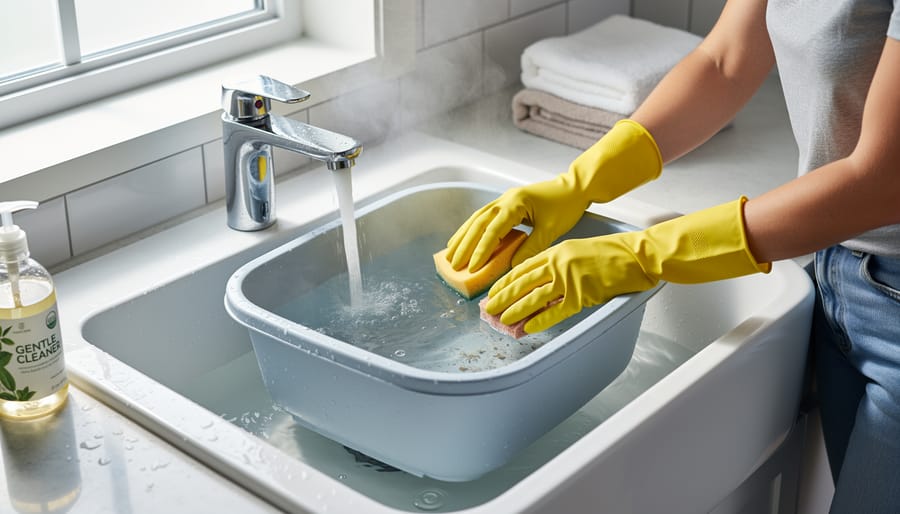
Once the box is empty, carry it to a bathtub, large sink, or outdoor area where you can work without splashing litter dust everywhere. Pour hot water into the box until it covers the bottom by an inch or two, then let it sit for three to five minutes. This soak loosens caked-on waste and urine crystals that dry scooping misses, making the actual scrubbing much easier.
You don’t need to add anything at this stage. Hot water alone softens debris effectively, and you’ll tackle any stubborn spots in the next washing step.
Washing with Soap or Natural Cleaners
Most of the time, hot water alone gets your litter box clean. The heat loosens stuck-on waste and kills most bacteria without any chemicals at all. You don’t need a cupboard full of products.
If you’re dealing with stubborn residue or lingering odor after soaking, reach for gentle household cleaners. Add a few drops of liquid dish soap to the hot water and use a sponge or cloth to scrub the interior sides and bottom. The soap cuts through grime without leaving harsh chemical traces that might bother your cat’s sensitive nose.
For odor that won’t budge or visible bacteria buildup, mix a small amount of white vinegar or hydrogen peroxide into the hot water instead of soap. Both are natural disinfectants that break down smell-causing bacteria. Use one or the other, never both at once, and keep the solution mild, a couple of tablespoons in a gallon of water is plenty.
Scrub all surfaces, paying attention to corners and the bottom where waste tends to cake. Rinse the box thoroughly with plain hot water afterward to wash away any soap or cleaner residue. Your cat’s paws will touch every surface, so a clean rinse matters. Skip anything with strong fragrances, bleach, or ammonia, they’re overkill and potentially harmful.
Drying and Refilling
After scrubbing away dirt and residue, drying the litter box completely is essential. Any moisture left behind can cause fresh litter to clump prematurely or create a breeding ground for bacteria. Use paper towels to wipe down the entire interior, paying attention to corners and seams where water tends to pool. If the box still feels damp, let it air dry for a few extra minutes before moving on.
Once the box is bone dry, add fresh litter to a depth of about two to three inches. This gives your cat enough material to dig and cover waste without overfilling the box, which can lead to spills. Pour the litter evenly across the bottom, and if odor control is a concern, sprinkle a light layer of baking soda on top before your cat returns to use it.
How to Tell If Your Litter Box Is Truly Clean
A clean litter box should pass a simple test: you shouldn’t smell anything unpleasant when you walk into the room, and your cat should hop in without hesitation. Here’s what to check:
- No lingering ammonia or feces odor, a faint litter scent is fine, but no sharp smells
- No visible clumps, residue, or film on the walls or bottom of the box
- The box is completely dry before you add fresh litter
- Your cat uses the box normally and doesn’t avoid it or eliminate outside of it
If your cat still avoids the box after a thorough cleaning, try a different approach. Some cats are sensitive to residual soap smells, so rinse the box more thoroughly next time or skip the dish soap entirely and use only hot water. If odors persist despite regular cleaning, the plastic may have absorbed smells over time, consider switching to a disposable litter box or replacing your current one every six to twelve months. You can also experiment with clumping vs non-clumping litter types to see if your cat prefers one texture or scent profile. If avoidance continues even with a spotless box and fresh litter, consult your vet, litter box aversion can signal a urinary tract infection, arthritis, or stress that requires medical attention.
Common Questions About Cat Litter Box Cleaning
Cat owners often have similar concerns when it comes to keeping their litter boxes clean and their cats happy. Here are answers to the most common questions we hear from pet families in Ottawa and beyond.
How often should I replace all the litter?
For clumping litter, you typically need to replace the entire box every two to three weeks, depending on usage. Non-clumping litter should be changed completely once a week since it absorbs moisture throughout rather than forming removable clumps.
Can I use bleach to clean my cat’s litter box?
No, avoid bleach and harsh chemical cleaners entirely. These products can leave toxic residues that are harmful to cats, and the strong smell may deter your cat from using the box. Hot water alone is effective, or you can add a small amount of dish soap, vinegar, or hydrogen peroxide for stubborn odors.
What if my cat won’t use the box after cleaning?
Make sure the box is completely dry before refilling, as cats dislike wet surfaces. If you used any cleaning product, rinse thoroughly to remove all traces of scent. Some cats are sensitive to change, so maintaining the same litter depth and type helps.
How many litter boxes do I need for multiple cats?
The general rule is one box per cat plus one extra. So if you have two cats, you should have three litter boxes placed in different locations around your home to prevent territorial issues and ensure each cat has easy access.
If your cat continues to avoid a freshly cleaned box, the issue might not be the cleaning method. Cats can be particular about their bathroom habits, and sometimes the problem lies with the litter itself. Taking time to choose the right litter for your cat’s preferences can make all the difference. Pay attention to whether your cat seems uncomfortable, scratches excessively at the sides, or eliminates just outside the box, these behaviors signal that something isn’t working.
When it comes to cleaning frequency, remember that daily scooping is the minimum, not the maximum. If you have multiple cats or notice odor building up quickly, don’t hesitate to scoop twice a day. The few extra minutes you invest in keeping the box fresh will save you from dealing with bigger problems down the road, including potential behavioral issues or a cat who decides the living room carpet looks more appealing than a dirty box.
Keeping your cat’s litter box clean doesn’t have to be complicated. Stick to the daily scoop habit and commit to a thorough weekly wash, and you’ll maintain a fresh, healthy environment for your cat and your household. Just as you invest time in your dog’s grooming and wellness, your cat deserves that same level of attentive care. Regular cleaning prevents health issues, eliminates odors, and keeps your cat happy, all with minimal effort once you establish the routine.
If you found this guide helpful, explore more pet grooming tips and expert advice across our site. Whether you’re caring for dogs, cats, or both, we’re here to help Ottawa pet owners provide the best for their animals.