
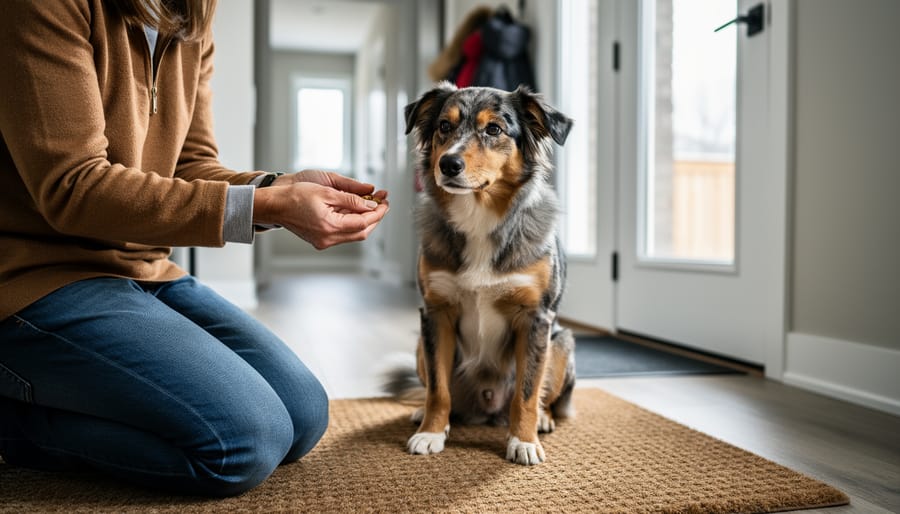
Most everyday dog behavior problems, like barking, leash pulling, and jumping, can be improved at home with a simple routine: calm practice sessions of 5 to 10 minutes, a handful of small treats, and the same cue and response every time. Plan on a few weeks of steady effort, and expect separation anxiety to take longer. The method works because dogs repeat what pays off. When you reward the behaviour you want and calmly remove the payoff for the one you don’t, your dog learns what earns the good stuff.
Here in Ottawa, the challenges are familiar. A dog that tows you down the sidewalk on a busy morning walk, barks at every passing neighbour, or panics when you leave for work isn’t being stubborn. They’re telling you what they haven’t learned yet.
This guide walks you through what you’ll need, how to keep training safe, the steps in order, and how to tell it’s working. You’ll also find clear signs for when a professional can help, plus what local training options in Ottawa can look like.
What You’ll Need Before You Start Dog Behavior Training
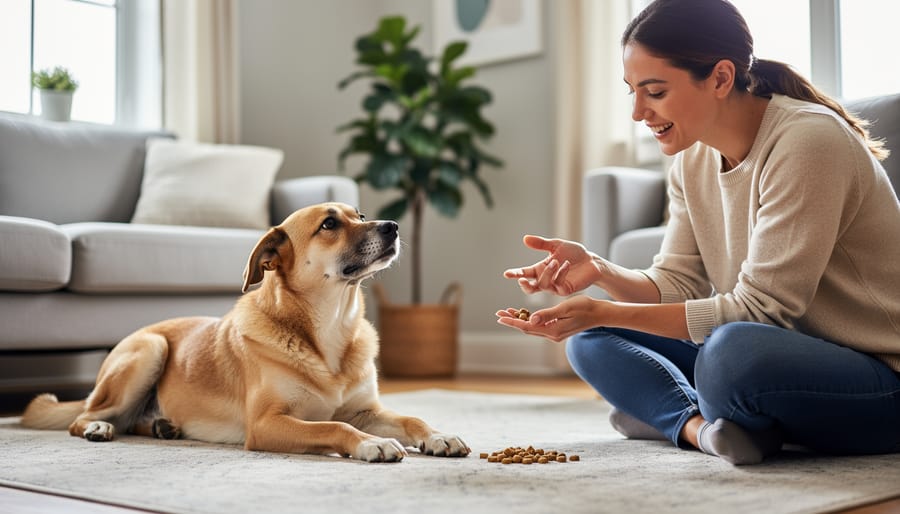
Choosing Rewards That Actually Motivate Your Dog
Positive reinforcement simply means rewarding the behavior you want, so your dog is more likely to repeat it. It’s a big part of reinforcing desired behaviors in a calm, kind way. Here’s a simple kit to gather:
- A comfortable, well-fitted flat collar or harness
- A standard 4-6 foot leash
- Tiny, extra-tasty rewards: small, soft, high-value treats
- A favourite chew or a food-dispensing toy
- A treat pouch
- A quiet space, crate, or mat for settling
- A notebook or phone for tracking progress
- Patience and short 5-10 minute sessions
Pick treats your dog gets truly excited about, and keep them pea-sized so a busy training day doesn’t mean extra calories. Count them as part of the daily meal portion.
Safety First: When to Pause, Adjust, or Call a Professional
A good training session should feel calm for both of you. If your dog won’t take a treat they’d normally love, that’s useful information: it usually means the stress level is too high to learn. Pause, add some distance from whatever is bothering them, and try again later at an easier level.
Skip punishment-based tools and harsh corrections, such as leash jerks or shock collars. They tend to add fear and confusion, which can make barking, pulling, and anxiety worse rather than better. Reward-based training keeps your dog feeling safe enough to learn.
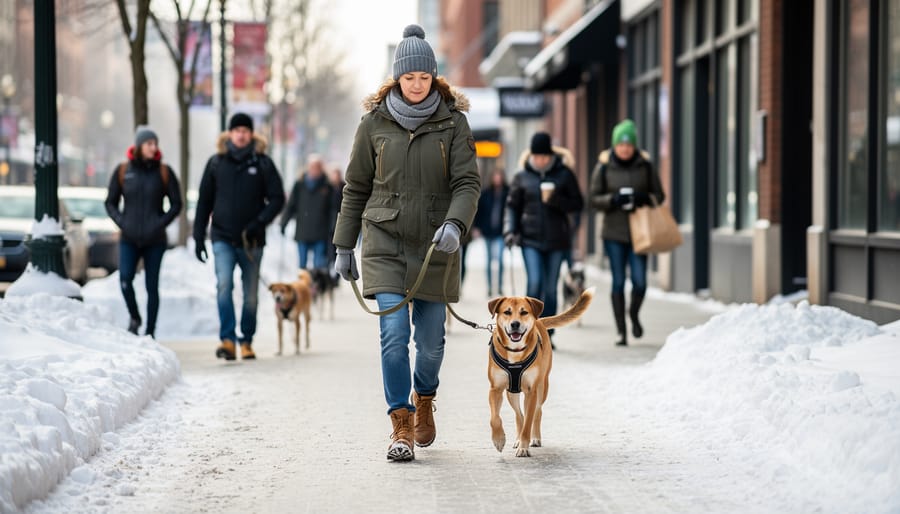
Give triggers plenty of room, too. On a busy Ottawa sidewalk, step off to the side or cross the street when another dog approaches. At the park, watch your dog’s body language and leave if they seem tense or overwhelmed. A quick refresher on dog park etiquette can help you set your dog up for good experiences.
Some behaviors are best handled with expert support. Consider reaching out if your dog lunges or reacts strongly on leash, shows aggression, or becomes seriously distressed when left alone. Research confirms that separation anxiety is real and it’s more than simple misbehavior. Programs like Behaviour Mod: Advanced exist specifically for leash reactivity, aggression, and separation anxiety, so you don’t have to figure it out alone.
The Most Common Behavior Problems in Ottawa Homes
Most dog behavior problems in Ottawa homes start with something simple: a dog who doesn’t yet know what you’d like them to do. Here are the five you’re most likely to meet.
Barking is often about boredom, excitement, or uncertainty. Apartment hallways and noisy neighbours give a dog plenty to announce. Jumping usually comes from enthusiasm, especially when a visitor knocks or you step in from a cold walk. Your dog isn’t being rude. They just haven’t learned a better way to say hello.
Leash pulling tends to be a practice problem. Snowy sidewalks, busy trails, and other dogs on the path are exciting, and a tight leash often gets your dog where they want to go. Chewing is typically boredom or a puppy’s natural urge to explore with their mouth. Separation anxiety is different. It’s real worry about being left alone, and it needs patience and a gentle approach.
Naming the behavior clearly matters because it shapes your plan. Jot down when it happens, where, and what comes right before it.
It’s also reassuring to know that private in-home training packages are described as a good fit for barking, jumping, and pulling on leash. These are everyday challenges many Ottawa owners work through, and they respond well to steady, kind practice.
Step-by-Step: How to Train Barking, Leash Pulling, and Separation Anxiety
Calming Excessive Barking
Barking is how dogs talk, so the goal isn’t silence, it’s less noise and more calm. Here’s a simple way to work on it at home.
- Spot the trigger. Note when the barking happens: the doorbell, footsteps in the hallway, or squirrels outside the window.
- Manage the setting. Frost the lower window panes, move the couch away from the glass, or play soft background sound to muffle apartment noise.
- Reward the quiet. The moment your dog stops barking, even for two seconds, say “quiet” and offer a treat.
- Stretch the pause. Slowly wait a little longer before each reward, so quiet becomes a habit.
- Offer outlets. A chew or stuffed toy and a good walk give that energy somewhere better to go.
Keep sessions short, a few minutes at a time, and end on a win. If the cue is working with the doorbell but not in the hallway, that’s normal. Every trigger takes its own practice, and none of it is a sign your dog is being “bad.”
Teaching Loose-Leash Walking
Start in a quiet spot where your dog isn’t distracted, like your living room, a hallway, or the backyard. Grab a handful of small, tasty treats and let your dog sniff around while you wait. Whenever they step into position beside you, mark it with a cheerful “yes!” and deliver a treat right at your leg. That spot becomes the best place in the world.
Once your dog is happily hovering at your side, take a few steps. Keep rewarding every moment the leash hangs in a relaxed “J” shape. If it tightens, simply stop and stand still, or turn and head the other way. No yanking or scolding is needed. Your dog quickly learns that a slack leash keeps the walk moving, while a tight one doesn’t.
Build slowly from there. Move to your front step, then a quiet street, and eventually busier spots like a bustling Ottawa sidewalk or a park path. Drop back to easier surroundings when distractions get big. For a full walkthrough, our guide to loose-leash walking goes deeper.
If progress feels slow, you’re not alone. Leash manners are a core focus of private training packages, and a trainer can tailor the plan to your dog.
Easing Separation Anxiety Gradually
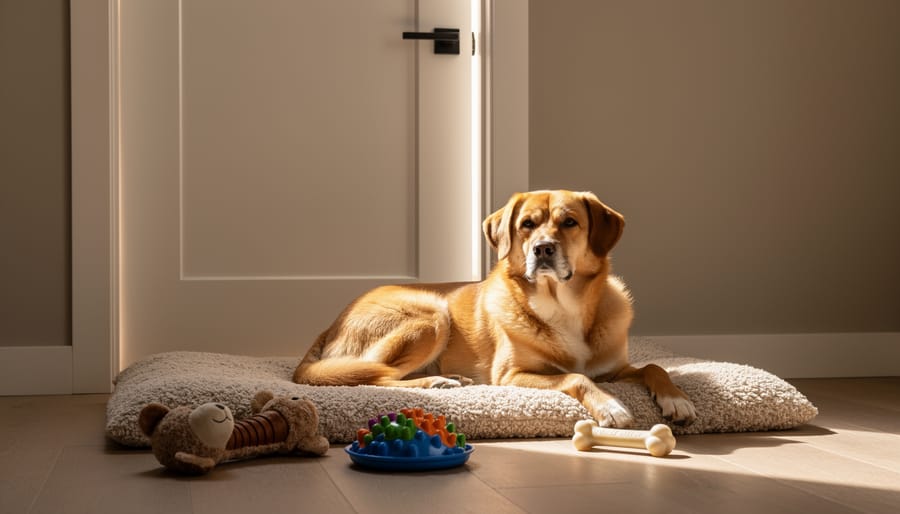
Dogs that struggle when left alone usually need to learn, in tiny steps, that being by themselves is safe and temporary. Go at your dog’s pace, because rushing is the one thing that sets you back.
Start with a cozy settling spot, like a bed or crate with a favourite blanket, and practise relaxing there while you’re home. Then begin with very short departures. Step out of sight for a few seconds, return calmly, and reward your dog for staying relaxed. Keep exits and returns low-key, with no big goodbyes or excited reunions, so coming and going feels ordinary.
A food puzzle or stuffed chew toy gives your dog something pleasant to focus on as you leave. Pick it up when you return, so it stays a special “alone time” treat.
Increase time apart slowly, from seconds to a minute, then a few minutes. If your dog gets restless, go back to the last duration that felt easy. That’s progress, not failure. Ottawa’s apartment living and long winter days can make this feel urgent, but steady practice pays off.
If your dog shows significant distress despite your efforts, that’s a good reason to look into advanced behaviour support. Programs like Behaviour Mod: Advanced exist for separation anxiety.
Choosing Between DIY, Private In-Home Training, and Specialty Programs
Deciding how to get help usually comes down to how serious the behavior is and how much guidance you want. If your dog is just learning loose-leash manners or you’re working on a bit of barking, DIY training with consistent rewards can go a long way. If progress stalls, or you’d like someone to coach you in your own home, private training is worth a look.
Private in-home training works one on one, in the spaces where the problem actually happens: your hallway, your entryway, your street. Waggy Walks Ottawa is one local example of what this can look like. They offer Private In-Home and Leash Manners packages that are described as a good fit for barking, jumping, and pulling on the leash. They also list a range of programs: a Puppy Program, Obedience: Basic and Advanced, Behaviour Mod: Basic and Advanced, Single Session, and Board & Train.
The two behaviour programs are worth understanding, since they match different needs. Behaviour Mod: Basic covers leash pulling, excessive barking, chewing, and jumping. Behaviour Mod: Advanced covers leash reactivity, aggression, and separation anxiety. For package pricing, Waggy Walks Ottawa lists $524.99 for five 1-hour sessions, $574.99 for six, and $734.99 for eight.
Whichever route you take, don’t be shy about asking questions. A good trainer will happily explain their methods, their experience with your dog’s specific issue, and what a typical session looks like. Choose someone whose approach feels kind, clear, and a good match for you and your dog.
How to Tell Your Training Is Working and What to Do Next
Progress with dog behavior training rarely shows up as one big breakthrough. It shows up in small, measurable changes, so give yourself something to measure. Jot down a few quick notes each day: how many barking episodes happened, how long your dog stayed calm alone, how often the leash went tight on your usual walk. A short phone video once a week is even better, because you’ll spot improvements you’d miss in the moment.
Look for patterns like fewer barking bursts, a looser leash, longer stretches of calm time alone, and a quicker bounce-back after a trigger like a hallway noise or a passing dog.
If progress stalls, don’t worry. Go back a step to where your dog was successful, reduce distractions, and bump up the value of your rewards. Training in the living room before the busy sidewalk is a classic fix.
Consistency matters just as much as technique. Everyone in the household should use the same cues, the same rewards, and the same rules, otherwise your dog gets mixed messages.
When you’ve been steady for a few weeks and things still aren’t moving, add follow-up coaching. Here’s how to choose a trainer who fits your dog and your goals.
Dog Behavior Training FAQs for Ottawa Dog Owners
How long does it take to see results?
Many owners notice small changes within a couple of weeks of short, daily practice, though lasting habits take longer. Every dog learns at their own pace, so celebrate the little wins along the way.
Can an older dog learn new behaviors?
Absolutely. Older dogs can pick up new skills with patience, tasty rewards, and shorter, gentler sessions. Just keep any physical limits in mind.
Is it better to train at home or in a class?
It depends on your dog. Home practice is great for building everyday habits, while private in-home training suits issues like barking, jumping, and leash pulling that happen in your own space.
Do I need a trainer for separation anxiety?
Mild cases can improve with gradual practice, but ongoing distress is a good reason to bring in help. Programs like Behaviour Mod: Advanced are built to address separation anxiety.
And what about winter? Ottawa’s cold snaps don’t have to pause your progress. Practice loose-leash manners and “quiet” cues in a hallway or living room, then add short outings when the weather cooperates. Even five minutes of indoor practice keeps your dog’s skills fresh until the sidewalks clear.
Dog behavior training is a skill you and your dog build together, one small step at a time. Some days will feel like progress and others will feel like a reset, and that’s completely normal.
The core plan stays simple: pinpoint the behavior and what triggers it, reward the habits you want to see, track your progress so you can spot real change, and bring in expert help when a problem goes beyond the basics. Patience and consistency matter far more than perfection.
Whether you’re working through apartment hallways or snowy sidewalks here in Ottawa, you’ve got this. Explore our training, grooming, nutrition, and daycare resources, and keep reading the blog for more expert-backed advice to help your dog thrive.