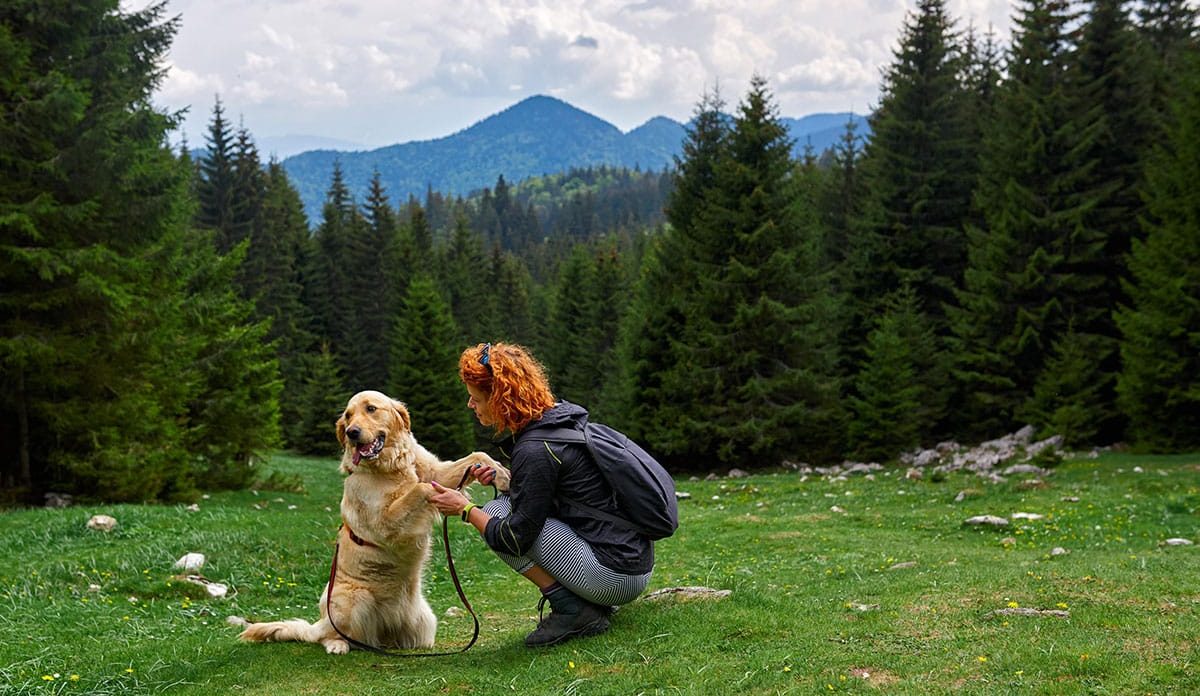
I am once again honoured to be one of the contributing photographers for this amazing online publication. Check out Corduroy on pages 10-15!
Check out the online PAWSH blog here.
Popularity: 1% [?]
I am once again honoured to be one of the contributing photographers for this amazing online publication. Check out Corduroy on pages 10-15!
Check out the online PAWSH blog here.
Popularity: 1% [?]
![Maxwell[1].JPG Maxwell 1](/odb-files/2012/01/Maxwell1.jpg)
Maxwell got away from his foster family this morning at about 6:30am! He is a red lab, scar on right side of his face, wearing collar with clip, recent neuter. He was lost in the area of Upper Dwyer Hill Road just east of March Road (which leads into Almonte).
Contact Roz at 613-286-0009 or Glenn at 613 229-2422
Popularity: 1% [?]
The most common types of aggressive reactive behaviour are…
A – Insecure, nervous, tense, fear based reactivity;
B – Bullying, dominating reactivity.
This behaviour may be directed at animate objects such as dogs or other non-human animals, at humans and at inanimate objects as well.

Most aggression in dogs occurs due to lack of leadership in the dog’s life. If dogs were pre-wired to be aggressive rather than social there would be very few dogs left standing. A dog in its natural state is a social being, a pack animal with the potential inherent to get along with others. There are very few dogs born with ‘bad wiring’. When a dog goes bad it is almost always a human who is responsible for the bad behaviour.
When puppies are young they learn their social skills from the adult dogs in their dog family. Now, as long as the adult dogs’ natural social state has not been negatively disrupted by human influence the adult dogs will teach their young how to get along without being aggressive. If you are thinking – yeah but what about the ‘Alpha’ – dominate dog…you need to read this.
Things go wrong when we humans…
A - Separate the dog from its early socialization process by removing the puppy from its parents and then;
B - We fail to take up the leadership role to coach and mentor the dog in the acquisition and maintenance of social skills – providing rules and boundaries.
In this day and age of technology and our fast paced-life we have lost an awareness of all of the ways in which we communicate. We have lost patience. We attempt to direct our dogs – we assume we know what we are doing – but most often people do not.
A dog learns aggressive-reactive behaviour because a human enables the behaviour in a dog. Either by failing to provide leadership or by actively abusing the dog. Usually when a human enables the aggression it has happened by accident – completely unintentionally.
Here are some typical ways that dogs develop aggressive reactive behaviour…
A - Dogs that lack proper coaching and mentoring can become insecure, anxious and fearful. When a dog is insecure it will either be overly submissive or overly defensive. We see these same behaviours in people as well. If you are insecure, anxious or fearful you are either going recede into the background or overcompensate by being a bully – it is the same for dogs. If your dog is nervous around humans or other dogs and you are nervous too – you tell your dog it is right to be worried. You enable the behaviour. If your dog has been attacked in the past by another dog and you are unable to let the past go, you enable your dog’s nervousness and aggression towards other dog.
B - Dogs who receive the wrong type of affection at the wrong time can become aggressive-reactive. When you reward a dog for being in an excited state the dog learns that being excited is good. When a little dog is insecure and starts to react (snarl, growl, snap, bark) at a bigger dog – if you pick the little dog up, you have just rewarded the little dog for reactive behaviour. Your dog learns that reactive aggressive behaviour is ok.
Popularity: 1% [?]
(Ottawa Dog of the Week for January 23rd, 2011)

“My dog is a West Highland White Terrier, Westie for short. His name is Sooty. He is 9 years old. He is a wonderful dog and has changed our lives. On his walks, he loves picking up sticks and bringing them back to the front step. We often joke about his stick museum. He also loves going on “trips”. He never knows where he is going but when he arrives, he always reacts with the same excitement. His greatest love though, is chasing squirrels. A pursuit he never tires of.
Attached are some photos of my terrier and companion, Sooty.” Sooty’s Human, Yvonne.
Popularity: 1% [?]
Dr. Ian Dunbar is scheduled to give a 3 Day seminar in Ottawa on September 28-30.
Popularity: 1% [?]
Posting tweet...
The BARKin Westboro Awoofs photos taken at Westfest 2011 at Bark & Fitz are now ready to be downloaded. Thanks to the dogs and their humans who participated!
If you had a photo taken at Westfest 2011 at Bark & Fitz, please follow these instructions to pick it up:
* Click here to open the album
* Find your dog and click the photo to make it bigger
* Above the photo there will be a down-facing arrow icon - click on the icon to download your photo!
Would you like your pooch featured as the Ottawa Dog of the Week? If so, please email us a short description about your dog, your dog's breed, age and 5-10 pictures.
If you are interested in writing an article for Ottawa Dog Blog as a guest writer, please contact us with your story idea.
Apparel for people and dogs as well as tote bags and mugs at our Ottawa Dog Blog Store