
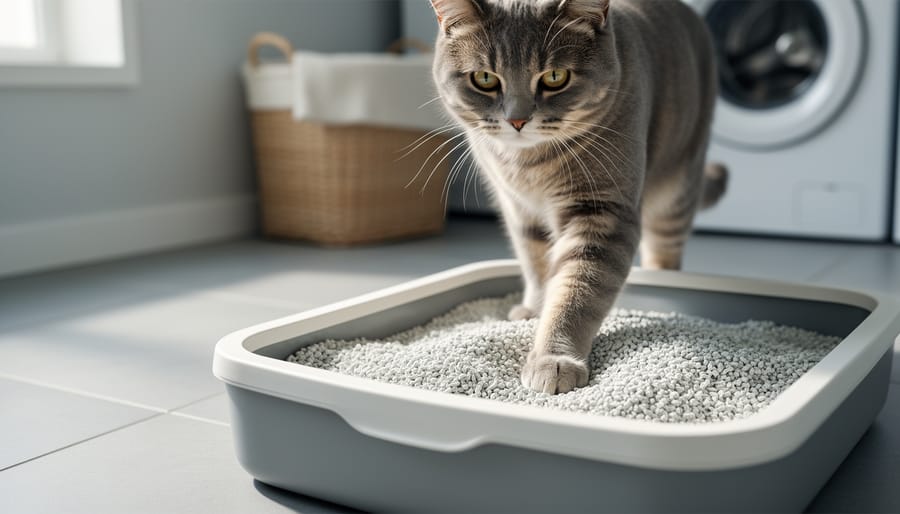
If you’re caring for a cat in Ottawa, here’s the baseline: plan to completely change the litter box monthly, though the actual frequency depends heavily on what type of litter you use. Clumping litter typically needs a full change every 2-4 weeks, while non-clumping varieties require replacement every 5-10 days.
The difference comes down to how each litter type handles waste. Clumping litter absorbs urine and forms solid clumps you can scoop out daily, leaving clean litter behind and extending the time between full changes. Non-clumping litter absorbs moisture too, but urine often settles to the bottom of the box beneath the litter layer, creating odors and bacteria buildup that demand more frequent replacement.
That monthly guideline shifts based on several practical factors: the number of cats sharing a box, your cat’s health and output, your own tolerance for odor, and how diligently you scoop. Daily scooping is essential regardless of litter type. This simple habit removes waste before it breaks down, controls smell, and keeps your cat happy, because cats are naturally fastidious and often refuse to use a dirty box.
Getting the timing right protects your cat’s health, keeps your home fresh, and saves you money by making your litter last as long as safely possible.
Quick Answer: When to Change Your Cat’s Litter
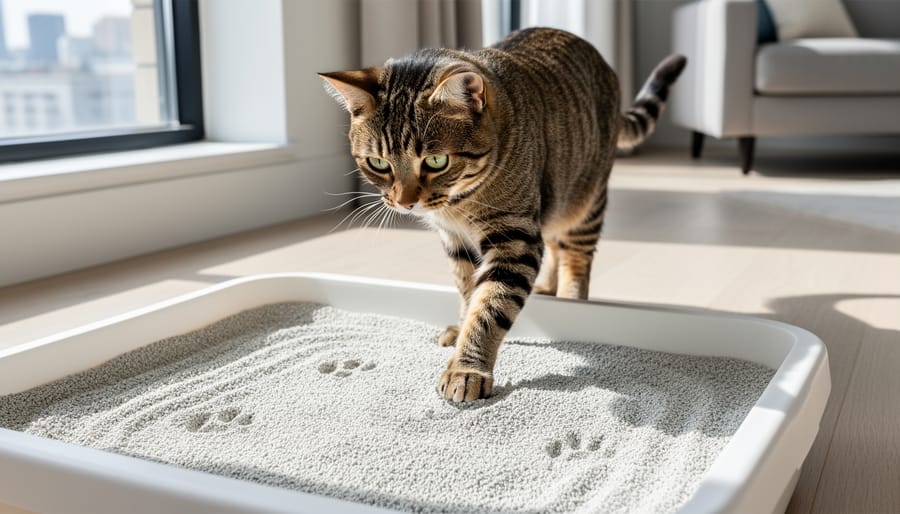
Here’s a monthly baseline to work from: most cat owners should plan on a full litter change once every 2-4 weeks for clumping litter, or every 5-10 days for non-clumping varieties. That said, monthly is just a starting point. The actual frequency depends on several factors, including how many cats use the box, what type of litter you choose, and your cat’s individual habits.
Clumping litter lasts longer because it forms solid clumps around urine and feces that you can scoop out, leaving clean litter behind. Non-clumping litter absorbs moisture differently. Urine soaks into the clay, corn, or wood materials and settles toward the bottom, which means the entire box needs refreshing more often to control odor and maintain hygiene.
Here’s the part that matters every single day: scoop the box. No matter which litter type you use or how often you do full changes, daily scooping removes waste before it breaks down and creates odor. It keeps your cat happy and your home fresh. Think of daily scooping as maintenance between full changes, not a replacement for them.
Timing Windows by Litter Type
Clumping Litter: Every 2-4 Weeks
Clumping litter works by forming solid clumps when it comes into contact with liquid. These clumps seal away moisture and odor, which keeps the rest of the litter box dry and fresh. When your cat urinates, the litter absorbs the liquid and hardens into a compact mass that you can easily scoop out. The same happens with solid waste, which gets coated and contained.
This clumping mechanism is exactly why Clumping vs non-clumping litter types have different change schedules. Because you remove both urine clumps and waste daily, the remaining clean litter stays usable much longer. Most clumping litter needs a complete change every two to four weeks, assuming you scoop daily and top up as needed.
Between full changes, your main job is scooping at least once a day. Remove all clumps and solid waste, then add fresh litter to maintain a depth of about three inches. This keeps the box functional and prevents the bottom layer from becoming saturated over time.
You’ll get the full four weeks from your clumping litter if you stay consistent with daily maintenance. Skip a few days of scooping, and you’ll notice odor building up faster, which means you’ll need to do a complete change sooner. The litter itself hasn’t failed; it just can’t keep up when clumps pile up and break down from repeated digging.
Non-Clumping Litter: Every 5-10 Days
Non-clumping litter operates on a different absorption principle than clumping varieties, which directly impacts how often you’ll need a fresh box. When your cat urinates, non-clumping materials like traditional clay, corn, or wood pellets absorb the moisture but don’t form removable clumps. Instead, the wet litter spreads and eventually sinks toward the bottom of the box, mixing with clean granules above it.
This absorption pattern means the entire litter bed becomes progressively saturated and odorous, even with daily scooping of solid waste. Most non-clumping cat litter needs to be changed every 5-10 days to maintain a sanitary environment. You can’t simply remove the soiled portions and leave the rest, so the whole box requires replacement more frequently than with clumping options.
Watch for these signs that it’s time for a complete change: a persistent ammonia smell even after scooping, visible wetness or darkening at the bottom when you stir the litter, or your cat suddenly eliminating outside the box. If you’re comparing different cat litter types and notice you’re changing non-clumping litter twice as often as you’d like, switching to a clumping formula might better suit your schedule and budget.
What Affects How Often You’ll Need to Change
Number of Cats Using the Box
Each additional cat dramatically shortens how long litter stays fresh. Two cats will saturate the same box roughly twice as fast as one, meaning you’ll often need to bump your schedule from every three weeks to every week or ten days. With three or more cats sharing a box, you might find yourself doing full changes every few days just to keep odors under control.
The math is simple: more cats means more waste, faster clumping breakdown, and quicker ammonia buildup. If you’re managing multiple cats, consider switching to a more absorbent option like recycled paper litter which handles heavy use better than basic clay. Better yet, follow the one-box-per-cat-plus-one rule to spread the load and extend freshness across all boxes.
Your Cat’s Health and Output
A cat dealing with digestive upset, urinary issues, or dietary changes will produce waste that breaks down litter faster and generates stronger odors. Diarrhea or increased urination from conditions like diabetes or kidney disease saturates litter quickly, requiring more frequent full changes even with daily scooping. Similarly, switching your cat’s food can temporarily alter stool consistency and smell, accelerating litter degradation during the transition period.
Individual cats also vary in their bathroom habits. Some cats dig vigorously and scatter litter, mixing clean and soiled material more thoroughly. Others are fastidious about covering their waste, creating larger affected areas with each use. A cat that drinks more water naturally produces more urine, while one on a high-protein diet may have more pungent waste. Pay attention to your specific cat’s patterns, if you notice the litter looking saturated or smelling off earlier than usual, health or habit factors likely mean you need to shorten your change schedule.
Personal Preference and Household Needs
Your own sensitivity to odor plays a bigger role in litter change timing than many cat owners realize. If you notice smells quickly or entertain frequently, you’ll likely want to refresh litter at the shorter end of the recommended window, every two weeks for clumping varieties rather than waiting the full month. Conversely, if your litter box sits in a basement or utility area and odor doesn’t bother you much, you might comfortably extend to the longer intervals.
Household size matters too. Homes with children, guests, or open floor plans benefit from more frequent changes to maintain a fresh environment. Your personal cleanliness standards are equally valid, some cat owners simply feel better knowing their cat has completely fresh litter every couple of weeks, and that preference is perfectly reasonable. There’s no single right answer; the best schedule is one that keeps both you and your cat comfortable.
Daily Scooping: The Non-Negotiable Step
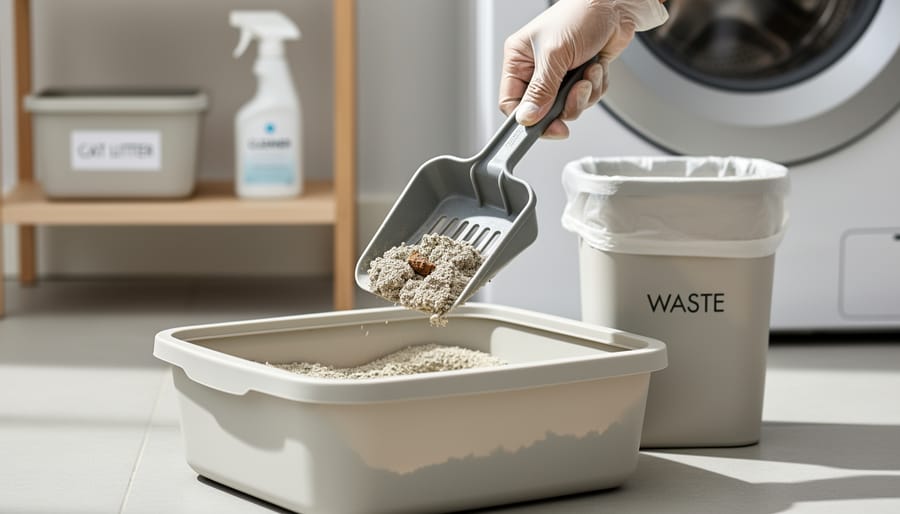
Daily scooping isn’t optional, it’s the foundation of good litter box hygiene, no matter which litter type you use or when you plan your next full change. While you might swap out clumping litter every few weeks and non-clumping every week or so, waste removal needs to happen every single day to keep your cat healthy and your home odor-free.
When you clean the litter box daily, you remove fresh waste before it breaks down and saturates the surrounding litter. This simple step extends the life of your litter, keeps smells manageable, and prevents your cat from stepping in old waste and tracking it through your home. Cats are fastidious creatures, many will avoid a dirty box, leading to accidents outside the litter area.
Make scooping a routine by pairing it with an existing habit. Many cat owners scoop first thing in the morning with their coffee or right after dinner while the dishwasher runs. Keep your scoop in a convenient spot and use a dedicated waste container with a lid nearby. The whole process takes less than two minutes once it becomes automatic, and that small daily investment pays off in a fresher home and a happier cat.
How to Know It’s Time for a Full Change
Your nose and your cat will usually tell you when it’s time for a complete litter change, even if your schedule says otherwise. While timing guidelines help, these clear warning signs mean you should replace the litter now rather than waiting for the calendar date.
- Persistent odor that lingers even right after scooping
- Visible wet spots or darkened patches that won’t dry
- Clumps that crumble or break apart when you try to scoop them
- Your cat scratching excessively before or after using the box
- Your cat eliminating outside the litter box suddenly
- Litter that feels damp or sticky to the touch
Trust these signals over any predetermined schedule. If your cat starts avoiding the box or you notice ammonia smell building up, the litter has reached its limit regardless of how recently you changed it. Cats have much more sensitive noses than we do, and a box that seems acceptable to you might already be unpleasant for them. When you spot any of these warning signs, do a full change that same day. Your cat’s willingness to use the box consistently depends on it feeling clean and fresh, and waiting even a day or two can lead to unwanted bathroom habits that are harder to reverse later.
After You Change: Keeping It Fresh Longer
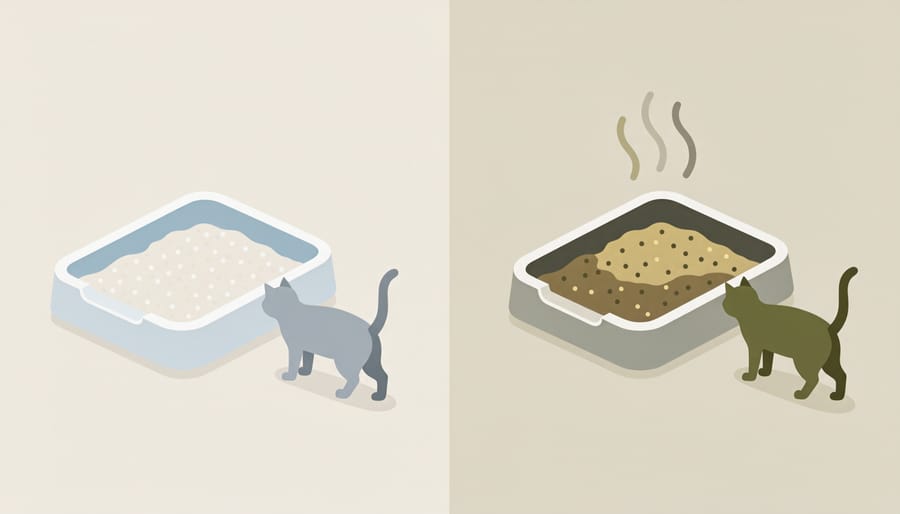
Changing the litter is only half the job. What you do immediately after, and between changes, determines how long that fresh box stays pleasant.
Start by scrubbing the empty box with hot water and a mild, unscented dish soap. Rinse thoroughly until no soap residue remains. Cats have sensitive noses, and strong-smelling cleaners can make them avoid the box altogether. Let it dry completely before refilling.
Here’s how to keep that freshness going:
- Fill the box to the right depth: 2-3 inches for clumping litter, 3-4 inches for non-clumping. Too shallow and odors escape quickly; too deep wastes litter without added benefit.
- Sprinkle a thin layer of baking soda on the clean box bottom before adding litter. This neutralizes odors without overwhelming your cat’s senses.
- Place the box in a well-ventilated area away from food bowls and high-traffic zones. Good airflow prevents ammonia buildup.
- Scoop daily, even on busy days. This single habit extends litter life more than any product.
- Top up litter weekly to maintain proper depth as you remove clumps.
For Ottawa cat owners, the City of Ottawa accepts used litter in green bin organics if you use biodegradable corn or wood varieties. Clay and silica litters go in the garbage. Local pet supply shops like Tailblazers on Bank Street and Bark & Fitz in Westboro carry a range of litter types and can advise on eco-friendly disposal options that suit your setup.
A clean box between changes means you’ll hit that full-change schedule on time, not early because odors forced your hand.
Frequently Asked Questions
Can I just add more litter instead of doing a full change?
No. Topping off depletes litter without removing accumulated urine saturation, bacteria, and odors embedded in the lower layers. A full change with box cleaning is necessary to maintain hygiene and prevent health issues.
Does the litter box location affect how often I need to change litter?
Yes. Boxes in humid areas like basements retain moisture and develop odors faster, requiring more frequent changes. Placing the box in a well-ventilated spot helps litter stay fresh longer.
What should I do if my cat stops using the litter box before the usual change time?
Change the litter immediately and clean the box thoroughly. Cats often avoid dirty litter, and waiting until your scheduled change time can lead to accidents or behavioral issues.
Is there a difference in change frequency for kittens versus adult cats?
Kittens typically use the box more frequently as they’re still developing bladder control, which can require slightly more frequent changes. Monitor saturation levels rather than strictly following the general timeline.
These questions address practical situations cat owners face beyond the basic timing guidelines. The litter box location question connects to the aftercare section’s placement strategies without repeating them, while the topping-off question clarifies a common mistake. The avoidance behavior question helps owners troubleshoot immediate problems, and the kitten consideration adds nuance for households with younger cats.
Changing your cat’s litter doesn’t follow a one-size-fits-all schedule. What works for your household depends on your litter type, how many cats you have, and what you’re comfortable with. The key is paying attention to your cat’s behavior and the litter box’s condition rather than strictly following a calendar. If you notice odor, reduced clumping, or your cat avoiding the box, it’s time for a change regardless of when you last did it.
Remember that daily scooping and regular full changes work together. Both matter for your cat’s health and your home’s cleanliness. If you’re in Ottawa and need quality litter or have questions about your cat’s habits, local pet supply stores and veterinary clinics are great resources. Your cat will thank you for keeping their bathroom fresh.