
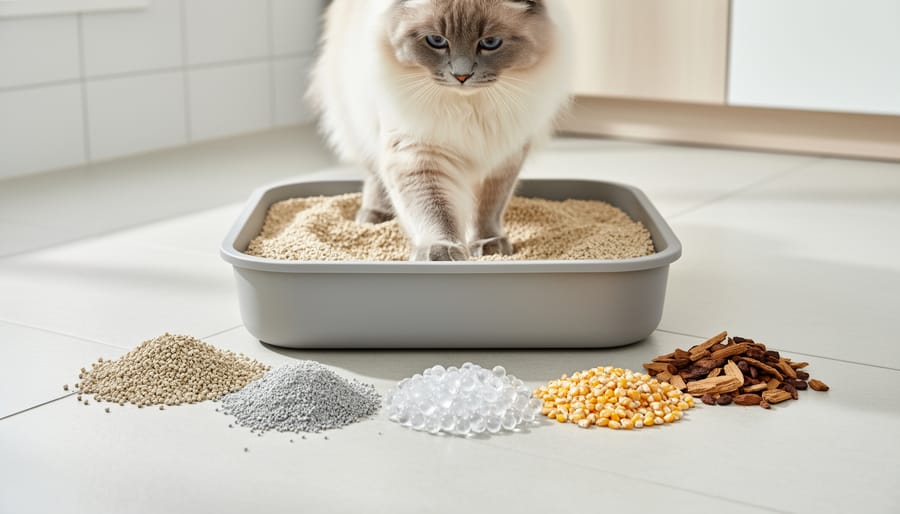
Choosing the right cat litter comes down to understanding seven main types: clumping clay, non-clumping clay, silica gel crystals, natural wood, recycled paper, corn-based, and walnut shell. Each works differently in terms of odor control, dust levels, tracking, and disposal options, and what suits a single-cat household in a small condo might frustrate a multi-cat family or a pet owner managing allergies.
The good news? Once you know how each type performs and what trade-offs matter most to you and your cat, the decision becomes straightforward. Clumping clay remains the most popular choice for its ease of scooping and strong odor control, while natural alternatives like wood or corn appeal to owners prioritizing biodegradability and lower dust. Silica crystals excel at moisture absorption but come with a higher upfront cost, and non-clumping clay offers budget-friendly simplicity for those willing to change the entire box more frequently.
Your cat’s preferences matter too. Some cats refuse certain textures, and kittens or cats with respiratory sensitivity do better with low-dust formulas. This guide breaks down each litter type with clear explanations of how it works, what it does well, and where it falls short, so you can match the right option to your household’s specific needs without guesswork or buyer’s remorse.
Why Cat Litter Type Matters
The litter you choose affects far more than just your cleaning routine. Odor control sits at the top of most owners’ priority lists, different materials trap or neutralize smells with varying success, and what works in a single-cat apartment may fall short in a multi-cat home. Dust levels matter too, especially if anyone in your household has allergies or respiratory sensitivities; some litters produce clouds when poured or scooped, while others generate almost none.
Tracking is another daily reality. Lightweight granules cling to paws and scatter across floors, turning your hallway into a gritty trail. Heavier or larger pellets tend to stay put. Ease of cleaning ties directly to how the litter behaves: clumping vs non-clumping formulas demand different maintenance schedules, and some materials require complete box changes more often than others.
Then there’s your cat’s preference, which you can’t overlook. Texture underfoot, scent intensity, and even the sound pellets make can influence whether your cat uses the box comfortably. When feline wellness and household convenience align, you’ve found the right match. Understanding these practical differences helps you move past generic recommendations and pick a litter that actually fits your life.
How We Chose These Types
We selected these seven litter types based on three main criteria: how commonly they appear in Canadian pet stores and online retailers, what makes each one materially different from the others, and how well they address the practical concerns of cat owners in our climate.
Each type on this list represents a distinct approach to managing cat waste, whether through different base materials, clumping mechanisms, or absorption methods. We’ve included both longstanding options that many cats already use and newer alternatives that address specific needs like reduced dust or environmental impact.
This isn’t a ranked list or a recommendation of specific products. Instead, we’re covering the full spectrum of what’s available so you can understand your options and decide what fits your household, your cat’s preferences, and your priorities.
1. Clay Clumping Litter: The Traditional Choice
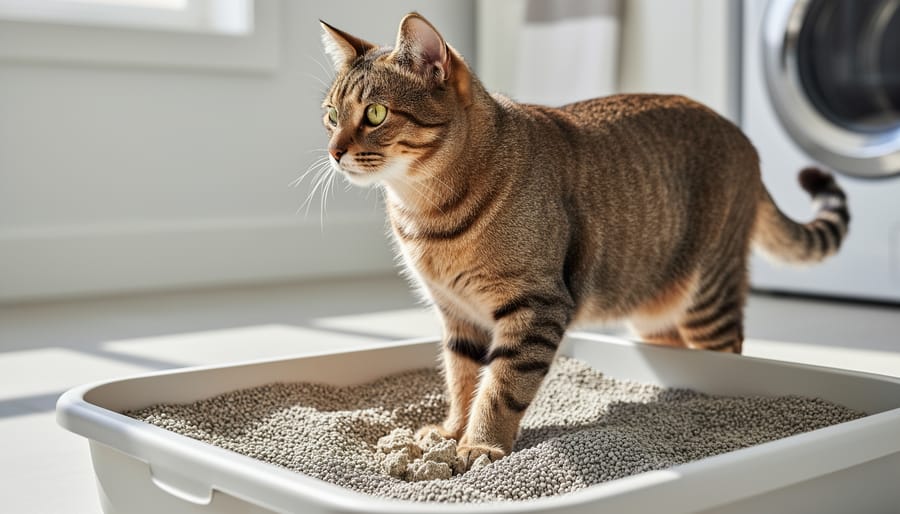
Clay clumping litter remains the most common choice in North American homes, and for good reason. Made primarily from sodium bentonite clay, this litter type absorbs liquid on contact and forms solid clumps that you can scoop out daily, leaving clean litter behind.
The clumping mechanism works because bentonite clay expands when wet, binding urine into discrete masses. This means you’re removing only the soiled portions rather than changing the entire box, which makes maintenance quicker and stretches your litter supply further.
Most cats accept clay clumping litter readily since the texture mimics outdoor soil. You’ll find it stocked in virtually every pet store and many grocery stores, often in multiple formulations. The familiar granule size and feel make transitions from kitten to adult straightforward.
The primary considerations center on dust and weight. Many clay litters generate noticeable dust clouds during pouring and scooping, which can irritate respiratory systems in both cats and people. Look for products labeled “low-dust” or “99% dust-free” if this concerns you. A standard container weighs significantly more than alternatives, which matters if you live in an apartment or have mobility limitations.
Clay litter cannot be flushed, it will damage plumbing and municipal systems. It also heads to landfills after use since it doesn’t biodegrade. If you choose clay clumping, prioritize brands that minimize dust, scoop daily to maximize efficiency, and store it where lifting heavy containers won’t strain your back.
2. Non-Clumping Clay Litter: The Absorbent Original
Non-clumping clay litter is the original formula that dominated the market for decades before clumping varieties arrived. Made from absorbent clay minerals like attapulgite or sepiolite, it soaks up liquid rather than forming solid clumps. When your cat uses the box, urine spreads through the litter and gets absorbed by the clay particles.
This type still has a place in certain households. Budget-conscious cat owners appreciate that non-clumping litter typically costs less per bag than clumping options. It’s also popular in multi-cat homes where some owners prefer doing complete litter changes on a schedule rather than daily scooping. The heavier granules tend to stay in the box better, which means less tracking through your home.
The trade-offs are notable, though. You can’t remove just the soiled portions, so you’ll need to dump and refill the entire box every few days to maintain freshness. Odor control isn’t as effective since waste sits on the surface and absorbed urine remains in the box until you change everything. The litter also becomes saturated faster in multi-cat households, which can lead to more frequent full changes than you’d expect.
If you’re watching your budget closely or have cats that kick litter everywhere, non-clumping clay offers a straightforward, no-frills solution.
3. Silica Gel (Crystal) Litter: The Low-Dust Option
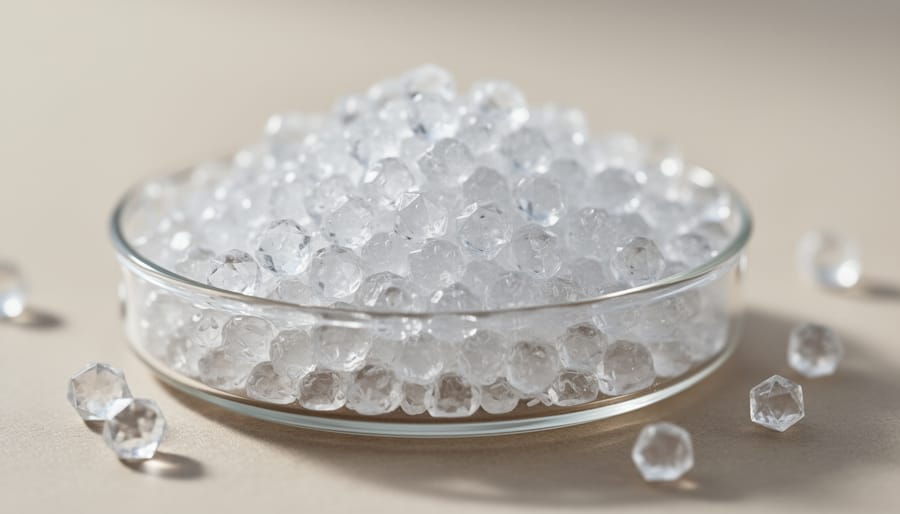
Silica gel crystal litter stands out for its near-total lack of dust, making it popular among households where respiratory sensitivity is a concern. These small, translucent crystals are made from silica dioxide, the same material used in those “do not eat” packets found in shoe boxes. The crystals work by absorbing moisture into millions of tiny pores while allowing liquid to evaporate, which keeps the litter box drier and reduces odor-causing bacteria.
The performance advantages are notable. A single box of crystal litter typically lasts three to four weeks for one cat before needing a complete change, which means fewer trips to the store and less frequent litter-box maintenance. The crystals are also significantly lighter than clay, which makes carrying large bags easier. Most crystal litters produce virtually no dust clouds during pouring or scooping, a relief if you or your cat has asthma or allergies.
The texture, however, can be a dealbreaker for some cats. The hard, irregular crystals feel quite different underfoot compared to softer clay or plant-based options, and cats accustomed to traditional litter may resist the change. The upfront cost per bag runs higher than clay, though the longer lifespan can balance that out over time. It’s also worth noting that silica gel isn’t biodegradable and can’t be composted, so if environmental impact weighs heavily in your decision, this isn’t the greenest choice. The crystals don’t clump around waste either, you’ll scoop solids but stir the crystals daily to distribute moisture evenly.
4. Pine Litter: The Natural Wood Option
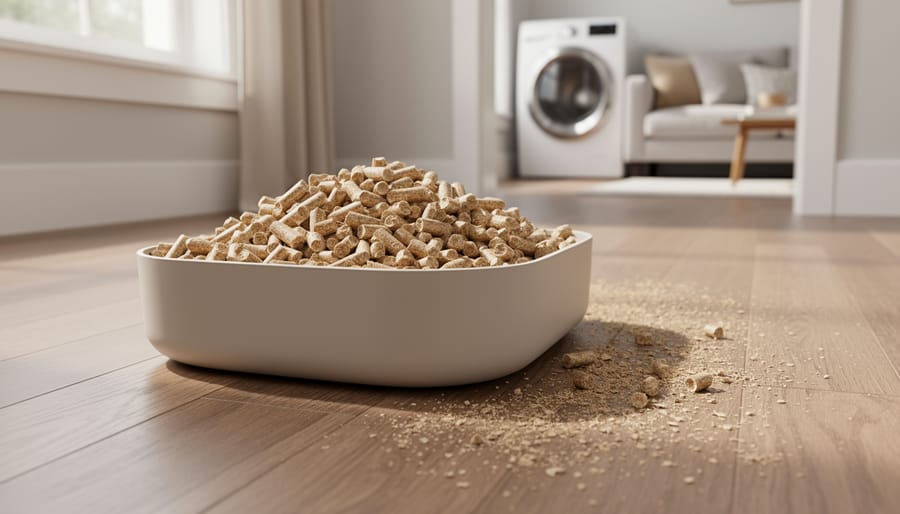
Pine litter offers cat owners a natural alternative made from compressed sawdust or wood fiber, typically derived from kiln-dried pine. This option works through a simple absorption mechanism: the wood fibers soak up moisture while natural pine oils neutralize ammonia odors without added chemicals or fragrances. You’ll find pine litter in two main forms, pellets that break down into sawdust when wet, and smaller granules that more closely resemble conventional litter.
The biodegradable nature of pine litter appeals to environmentally conscious pet owners, and many find the mild, woody scent pleasant compared to artificial fragrances or the harsh smell of ammonia. Pine litter produces notably less dust than clay options, which benefits both cats and humans with respiratory sensitivities. It’s also lighter to carry and typically lasts longer between full changes than traditional litter.
However, the pellet texture feels unfamiliar to cats accustomed to fine-grain clay, so some felines initially resist using it. A gradual transition works better than an abrupt switch. As pellets absorb urine, they disintegrate into sawdust that collects at the bottom of the box, which means you’ll need to sift out waste and top up pellets regularly rather than scoop clumps. This maintenance routine differs from both clumping clay and recycled paper litter so consider whether it fits your cleaning preferences before committing to pine.
5. Wheat and Corn Litter: Plant-Based and Clumping
Grain-based litters made from wheat or corn offer a middle ground between traditional clay and newer alternatives. These plant-derived options appeal to cat owners seeking natural materials with performance that rivals conventional litters.
Both wheat and corn litters clump when wet, using natural starches and enzymes to bind soiled material together. This makes scooping straightforward, similar to clay, while keeping the box fresher between full changes. The natural enzymes in these grains also work to neutralize ammonia odors rather than just masking them, which many owners find effective for everyday odor control.
A key advantage is biodegradability. Unlike clay, these litters break down naturally, and some brands market them as flushable in small amounts where local plumbing and regulations permit (always check your municipal guidelines first). They’re typically lighter to carry than clay and produce moderate dust levels.
Storage matters with grain litters. In humid conditions, moisture can encourage mold growth, so keep the bag sealed and the litter box area well-ventilated. The grain scent may also attract pests like insects or rodents if litter is left exposed or stored improperly, not a common issue, but worth noting if you have a pantry or basement storage situation.
Most cats adapt well to the softer texture of grain litters. If you’re environmentally conscious and want clumping convenience without synthetic materials, wheat or corn litter delivers a practical, renewable option that handles daily use effectively.
6. Paper Litter: The Recycled and Gentle Alternative
Recycled paper pellet litter offers a uniquely gentle option that works especially well for cats recovering from surgery, declawing, or dealing with paw injuries. The soft, non-abrasive texture won’t irritate sensitive pads, making litter box visits more comfortable during healing. These pellets are made from post-consumer paper products, so they’re an eco-conscious choice that diverts waste from landfills.
Paper litter produces very little dust, which benefits both cats with respiratory sensitivities and owners who want cleaner air around the box. The pellets absorb liquid and break down into a soft, sawdust-like material that’s easy to scoop when you how to clean the box daily. If you’re using a disposable litter box paper litter’s lightweight nature makes disposal easier.
The trade-offs are real, though. Paper litter doesn’t control odors as effectively as clay or silica options, so you’ll need to change it more frequently to keep smells under control. The pellets can be pricier per pound than conventional litters, and some cats find the texture unfamiliar or unappealing. If your cat has special needs or if environmental impact matters more than budget, paper litter deserves consideration.
7. Walnut Shell Litter: The Eco-Friendly Clumper
Walnut shell litter has gained traction as a natural alternative that doesn’t sacrifice performance. Made from crushed walnut shells, this plant-based option forms tight clumps when wet, making daily scooping straightforward. The material’s natural absorbency locks in moisture while its fibrous structure traps odors without added chemicals or fragrances.
One standout feature is the dark brown color. Unlike lighter litters where waste is immediately visible, walnut shell litter’s deep tone camouflages soiled areas between cleanings, which some cat owners find more visually appealing. The litter produces minimal dust during pouring and scooping, a benefit for both human and feline respiratory health.
Because it’s biodegradable, walnut shell litter can be composted in non-edible gardens (never use cat waste compost on vegetable beds) or disposed of without the environmental guilt of clay mining. The shells are typically a byproduct of the food industry, adding an upcycling element to the appeal.
However, households with nut allergies need caution. While walnut shells are processed and unlikely to trigger airborne reactions in most cases, anyone with severe sensitivities should consult their doctor before introducing this litter type. The texture is slightly coarser than clay, so cats accustomed to ultra-fine grains may need a transition period. Tracking is generally moderate, similar to other granular natural litters.
Choosing the Right Litter for Your Cat
The litter that works brilliantly for one cat might be completely rejected by another. Start by considering your cat’s current habits and preferences, if they’re already using a particular type without issues, a dramatic switch may not be necessary. For cats with no strong preference, you have more flexibility to prioritize other factors.
Several key considerations should guide your decision:
- Texture preference: Kittens and senior cats often prefer softer, finer textures, while younger adult cats typically adapt to most materials
- Dust sensitivity: If anyone in your household has asthma or allergies, low-dust options like silica gel or paper become essential
- Environmental impact: Plant-based litters offer biodegradability, but weigh this against performance needs
- Ease of disposal: Consider whether you can compost, flush, or need to bag litter for trash pickup
- Budget: Natural options often cost more upfront but may last longer; traditional clay is economical but requires frequent replacement
- Litter box location: High-traffic areas benefit from low-tracking, low-odor types
If you’re switching types, transition gradually over seven to ten days by mixing increasing amounts of the new litter with the old. Watch for signs of rejection, elimination outside the box, excessive digging, or avoidance, and be prepared to slow the transition or try a different option. Cats with declawed paws or recent surgery need especially gentle textures like paper. Your cat’s behavior will tell you what works.
Common Questions About Cat Litter Types
Can you mix different types of cat litter? It’s not recommended. Each litter type has distinct absorption and clumping properties, and combining them can create a messy, less effective product. If you’re switching types, transition gradually by mixing small amounts of the new litter into the old over 7-10 days.
How often should you change cat litter completely?
This depends on the type: clumping litters need a full change every 2-4 weeks, while non-clumping varieties require replacement every week. Always scoop daily regardless of type, and replace immediately if you notice persistent odor.
Is scented or unscented litter better?
Most cats prefer unscented options since their sense of smell is much stronger than ours. Scented litters may mask odors for humans but can overwhelm or deter cats from using their box.
Can you really flush cat litter down the toilet?
Even products labeled flushable can cause plumbing issues, and flushing spreads Toxoplasma parasites into water systems. Check local regulations first, as many municipalities prohibit it entirely.
Are natural litters actually better for the environment?
Generally yes, since plant-based and paper options are biodegradable and compostable. However, their environmental impact also depends on sourcing practices and how far they’re shipped, so local availability matters.
The truth is that “best” litter varies by household. A cat recovering from surgery needs soft paper pellets, while a home with allergies benefits from low-dust silica crystals. Watch your cat’s behavior closely after any change, if they avoid the box or scratch excessively at the sides, the litter probably isn’t working for them.
The landscape of cat litter has evolved significantly, offering everything from traditional clay to plant-based alternatives and engineered crystals. No single type works best for every household, your ideal choice depends on your cat’s preferences, any health sensitivities, your cleaning routine, and your environmental priorities. Watch how your cat responds when you introduce a new litter, since their comfort and willingness to use the box matter more than any feature list.
This same thoughtful, observation-based approach serves you well across all pet care decisions, whether you’re choosing food, bedding, or grooming products. Taking time to understand what works for your individual pet, rather than defaulting to what’s most popular or convenient, creates a healthier and happier home for everyone.