
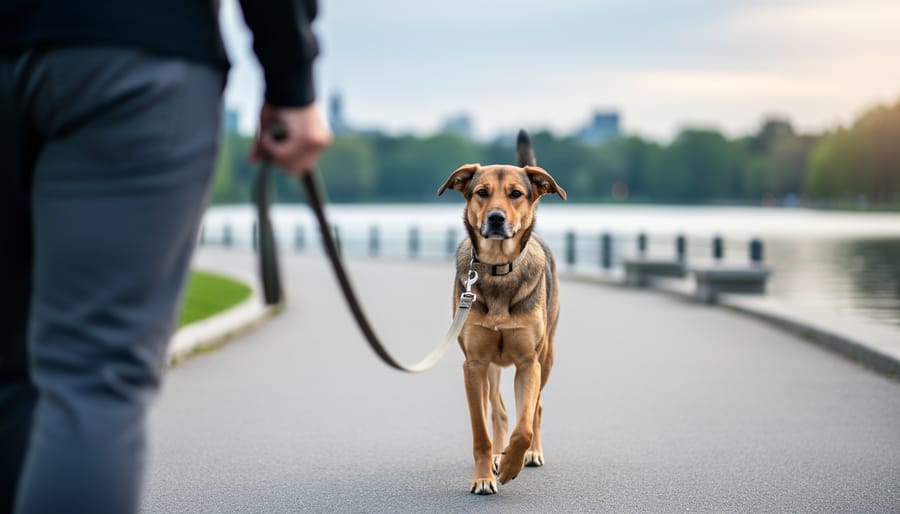
Teaching your dog to walk calmly on a leash takes about 4 to 6 weeks of consistent, positive-reinforcement training, with daily 5 to 15 minute practice sessions focused on achieving a loose-leash walk where the leash forms a gentle J-shape rather than pulling taut. This structured approach works because dogs learn fastest through short, frequent repetitions in low-distraction environments, gradually building the muscle memory and impulse control needed to resist pulling when they spot a squirrel or another dog approaching.
For Ottawa dog owners, mastering leash training transforms your daily walks through Dow’s Lake or along the Rideau Canal from a frustrating tug-of-war into an enjoyable bonding experience. The method relies on one simple rule: the moment your dog pulls, you stop walking immediately. No forward progress happens until the leash goes slack again. This teaches your dog that pulling gets them nowhere, while walking calmly beside you earns forward movement and rewards.
The beauty of current positive-reinforcement techniques is their simplicity. You won’t need expensive equipment or complicated commands. Start in a quiet location like your backyard or a low-traffic street where your dog can focus without constant distractions. Work in short bursts, typically about 5 minutes at a time, which keeps your dog engaged without overwhelming them. As your dog improves, you can introduce an “off-duty” cue, a specific word like “free time” that signals when they’re allowed to sniff and explore on a longer leash, giving them mental enrichment while still maintaining control.
What You’ll Need Before You Start
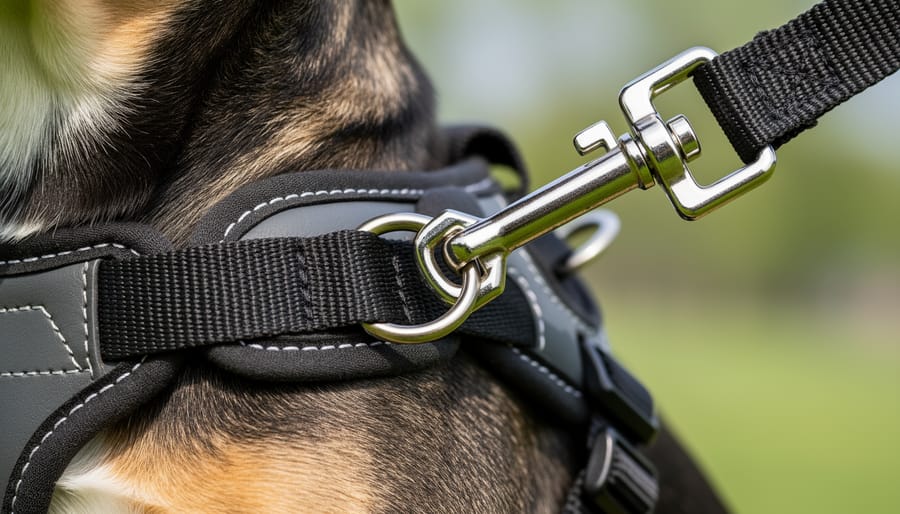
Before you begin the 4-6 week training journey toward a gentle J-shaped leash, gather the right tools. Having everything ready means you can focus on your dog during those short 5-minute practice sessions instead of scrambling for treats or fumbling with equipment.
Here’s your essential checklist:
- A 4- to 6-foot standard leash in nylon or leather, skip retractable leashes, which teach pulling
- A well-fitted flat collar or front-clip harness sized for your dog’s build
- High-value training treats cut into pea-sized pieces, think chicken, cheese, or freeze-dried liver
- A treat pouch that clips to your waistband for quick access and rewards
- Optional: clicker for marker training, extra leash for backup, or food-dispensing toys for mental enrichment between sessions
The leash length matters because it gives your dog enough freedom to explore during off-duty walks while keeping them close enough for immediate feedback when you stop. Front-clip harnesses discourage pulling by redirecting your dog’s momentum toward you rather than forward, making them ideal for strong or enthusiastic pullers. Back-clip harnesses work well for dogs who already walk calmly but need gentle guidance.
Choose treats your dog doesn’t get any other time, this makes training sessions special and keeps motivation high. Cut them small so your dog can eat and refocus quickly without getting full. A treat pouch keeps your hands free and rewards instant, which matters when you’re reinforcing that loose-leash position in real time.
For puppies or easily distracted dogs, a front-clip harness paired with high-value treats gives you the best setup for success. Larger or calmer adult dogs often do fine with a flat collar and consistent reward timing. Match your gear to your dog’s current behavior, not their ideal behavior, and you’ll see faster progress.
Important Safety Guidelines and Stop Conditions
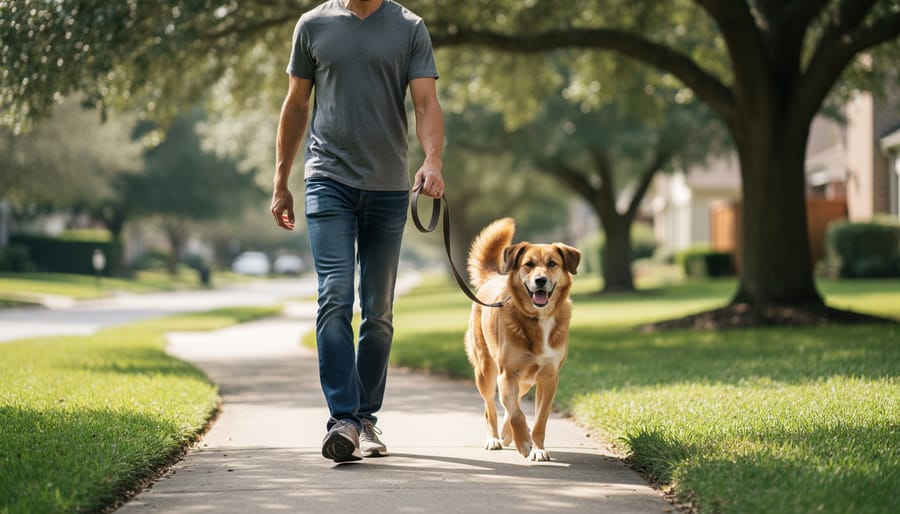
Training your dog requires attentiveness to their wellbeing at every step. Watch for signs that your dog is tired, stressed, or overwhelmed: excessive panting, lip licking, yawning, pulling toward home, or refusing treats they normally love all signal it’s time to stop. Ottawa’s weather adds another layer, summer heat above 25°C calls for early morning or evening sessions, while winter temperatures below -15°C can be harsh on paws and patience. Always cut sessions short if conditions become uncomfortable.
Never yank or jerk the leash as a correction; it damages trust and can injure your dog’s neck or throat. Avoid training when your dog is overstimulated, hungry, or hasn’t had a chance to relieve themselves first. If your dog shows signs of fear or aggression toward other dogs or people during walks, pause leash training and consult a certified professional trainer in Ottawa. Similarly, if you’ve been consistent for six weeks without progress, or if your dog seems anxious or in pain while walking, professional guidance can identify underlying issues you might miss. Your dog’s safety and comfort matter more than sticking rigidly to a schedule.
Step-by-Step: Teaching Loose-Leash Walking
Step 1: Pick Your Training Location
Start your training in the quietest spot you can find, ideally your backyard, a empty driveway, or a calm side street during off-peak hours. Your dog needs to focus on you and the leash, not squirrels, passing joggers, or other dogs. A distraction-free environment lets them learn the basics without their attention splitting in ten directions.
Look for somewhere familiar to your dog but boring enough that they won’t be constantly scanning for excitement. Many Ottawa neighborhoods have quiet residential streets early in the morning or late afternoon that work perfectly. If you don’t have a private yard, scout your block for the calmest stretch before you start training.
Once your dog consistently walks with a loose leash in this quiet zone, you can gradually move to busier environments. But those first few sessions need simplicity. Save the Ottawa walking spots with scenery and activity for later, after the foundation is solid.
Step 2: Choose Your ‘Off-Duty’ Cue Word
Pick a simple, upbeat word or short phrase that you’ll use every time to tell your dog this is an off-duty walk, not a training session. Good options include “free time,” “go sniff,” “explore,” or “break.” Whatever you choose, make it different from your everyday commands like “sit” or “heel” so your dog quickly learns this word means relaxed freedom on the leash. Stick with the same cue every single time. Consistency is everything. If you say “free time” today and “go ahead” tomorrow, your dog won’t understand the pattern. Keep it the same, and within a few sessions your pup will recognize the cue and relax into the off-duty mode.
Step 3: Decide How Much Leash Freedom to Give
For training walks, keep your dog on a shorter leash, about four feet works well, so you can quickly reinforce the loose-leash position and guide them back when they drift. This length gives enough room for the gentle J-shape you’re aiming for without allowing your dog to wander far enough to build pulling momentum. During off-duty walks (when you’ve given your chosen cue word), you can let out more leash, six feet or the full length of your standard leash, allowing your dog to sniff, explore, and move more freely without the pressure to maintain perfect position. The key is consistency: always use the shorter length during structured training sessions and the longer length only after you’ve clearly signaled off-duty time. This contrast helps your dog understand the difference between focused training and relaxed exploration, making both types of walks more enjoyable and less confusing for everyone involved.
Step 4: Introduce the Off-Duty Cue
Once you’ve chosen your cue word, it’s time to put it into action. At the start of your walk, pause and say your chosen word in a bright, friendly tone, “free time,” “sniff time,” or whatever you picked. The moment you say it, loosen your grip slightly and let your dog move ahead or explore within the length you decided on in Step 3. Your body language matters here: relax your posture, take a breath, and let the leash drape naturally rather than holding it taut. This signals to your dog that right now, the rules are different.
The key is consistency. Every off-duty walk should start with that same cue word, delivered the same way, so your dog learns to recognize it. Over the first few sessions, you’ll notice your dog beginning to associate the word with freedom to sniff, wander, and set the pace. When it’s time to switch back to structured training, simply stop using the cue and return to the focused loose-leash position you’ll practice in Step 6. This clear boundary helps your dog understand when it’s work time and when it’s relax time, making both experiences less stressful for you both.
Step 5: Start with Short 5-Minute Sessions
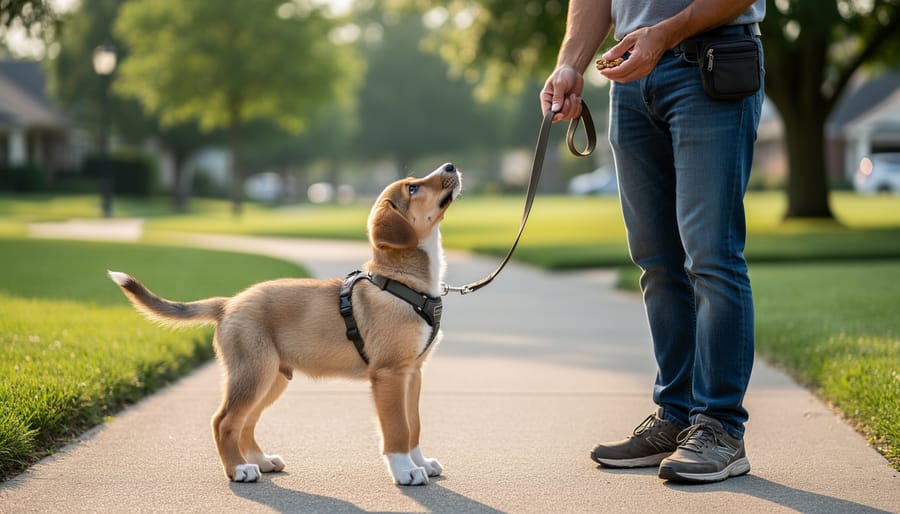
Short five-minute sessions keep your dog focused and prevent mental fatigue during early training. Set a timer on your phone so you end on a high note before frustration sets in, puppies and young dogs lose concentration quickly, and pushing longer risks backward steps.
Use each five-minute window to practice three to four successful loose-leash passes. Start walking, reward the moment you see that gentle J-shape leash, and stop immediately if your dog pulls. You’re building positive associations, not endurance, so quality repetitions trump duration every time.
Plan two or three of these short sessions throughout the day rather than one marathon practice. Morning, midday, and evening work well for most Ottawa schedules. Your dog will retain more from frequent, focused bursts than from lengthy drills that leave both of you drained. As the J-shape becomes second nature over the next week or two, you’ll naturally extend these sessions toward the full fifteen-minute mark.
Step 6: Practice the Loose-Leash Position
Now that you’ve established your training routine and location, it’s time to focus on what that ideal loose-leash position actually looks like. The goal is a gentle J-shape in the leash, slack hanging in a smooth curve from your hand to your dog’s collar, with no tension pulling in either direction.
Start by walking forward a few steps. The instant you see that J-curve form, mark the moment with a cheerful “yes!” and immediately deliver a treat at your dog’s nose level. You’re rewarding the position, not just the lack of pulling, so timing matters. Your dog needs to connect that specific relaxed leash state with the reward.
Repeat this sequence constantly during your 5-minute sessions: walk, watch for the J-shape, mark, treat. It feels repetitive, but you’re building muscle memory for both of you. Your dog learns where to walk, and you learn to spot and reward the correct position before tension creeps back in.
Some dogs catch on within a session or two; others need several days of practice. Keep sessions short and upbeat. If the J-shape appears for three steps, that’s progress worth celebrating, you’re teaching a new default walking position, and consistency turns those brief moments into habit.
Step 7: Apply the Immediate Stop Rule
The immediate-stop rule is the single most powerful tool for ending pulling behavior. The moment you feel tension in the leash, even slight pressure, freeze in place. Don’t yank, don’t say anything, just become a tree. Your dog will quickly learn that pulling gets the opposite of what they want: forward progress stops completely.
Wait patiently until your dog releases the tension and the leash returns to that gentle J-shape. This might take three seconds or thirty; stay still and let your dog figure it out. The instant you see slack, mark it with “yes” or a clicker, offer a treat at your side, and resume walking. If they pull again within two steps, repeat the process.
Consistency is everything here. Every single pull must result in an immediate stop, even if you’re mid-stride or nearly home. Mixed messages, stopping sometimes but letting them drag you other times, teaches your dog that pulling works often enough to keep trying. This correction feels slow at first, but most dogs grasp the connection within two to three training sessions when you apply it without exception.
Step 8: Gradually Add Distractions and Duration
Once your dog consistently holds a loose leash in your quiet starting location, it’s time to build stamina and challenge their focus. Over the next several weeks, extend each session gradually, add a minute or two every few days until you reach the full 15-minute daily practice window. Your dog’s attention span will grow as the routine becomes familiar, so don’t rush; a dog that walks calmly for eight minutes today will handle ten minutes next week.
Next, change the scenery. Move from your backyard or empty side street to a busier block, a quiet park path, or a neighborhood with occasional passersby. Introduce one new distraction at a time, other dogs at a distance, children playing, or passing cyclists, and return to the immediate-stop rule if pulling resurfaces. Each fresh environment resets some of your dog’s impulse control, so expect a brief step back before progress resumes. By week four or five, you’ll notice your dog recovers faster and holds the J-shape leash through distractions that once derailed the walk. Keep sessions positive, reward every success, and trust the 4-6 week timeline, consistency across varied settings locks in the skill.
Checking Your Progress and Moving Forward
You’ll know your dog has truly mastered loose-leash walking when these signs appear consistently across multiple walks:
- The leash maintains a gentle J-shape throughout the walk, even when you change direction
- Your dog checks in with you every few steps without needing prompts or treats
- Their body language stays relaxed, shoulders loose, tail neutral, breathing steady
- You rarely need to stop and wait for them to return to position
If you’re seeing three out of four of these markers after your initial training period, you’re ready to add complexity. Start by introducing mild distractions: walk past a quiet café, practice near a playground at off-peak hours, or try a new street in your neighborhood. Keep these early challenge sessions short, around ten minutes, and bring high-value treats to reinforce success in tougher conditions.
When setbacks happen, they’re usually temporary. A dog that suddenly pulls after weeks of good behavior often needs a refresher on the immediate-stop rule or may be overtired. Drop back to easier environments for a few sessions, then rebuild gradually. If pulling persists for more than a week despite consistent corrections, check whether your timing has drifted or if a new distraction (construction noise, a neighbor’s cat) is overloading their focus.
Once your dog walks calmly on residential streets, you can test their skills in busier settings like farmers’ markets or along the Rideau Canal pathways. Before visiting high-traffic areas, brush up on dog park etiquette and leash manners around other animals. If your dog struggles with specific triggers, cyclists, skateboards, other dogs, or if progress stalls after six weeks of daily practice, a local Ottawa trainer can diagnose the issue and tailor a plan. Most behavioral patterns respond well to professional guidance when home training hits a plateau.
Common Questions About Leash Training
How long does leash training really take?
Most dogs learn loose-leash walking basics in 4 to 6 weeks with consistent 15-minute daily sessions. Some dogs pick it up faster, while strong pullers or easily distracted breeds may need a few extra weeks to master the gentle J-shape leash position in all environments.
What if my dog still pulls after 6 weeks?
Persistent pulling usually means you need to go back to a quieter training environment and shorter sessions. Make sure you’re applying the immediate-stop rule every single time your dog pulls, and consider whether your treats are high-value enough to compete with outdoor distractions.
Can I train an older dog to walk nicely on leash?
Absolutely. Older dogs learn leash skills just as well as puppies, though they may have more ingrained pulling habits to unlearn. The same 5-minute session approach and positive reinforcement methods work for dogs of any age.
Do different breeds need different approaches?
The core technique stays the same across breeds, but you’ll adjust your expectations and rewards. High-energy breeds like huskies or terriers may need more frequent reinforcement and shorter initial sessions, while calmer breeds often progress faster through the training timeline.
If you’re struggling despite consistent practice, it might be time to choose a training class where a professional can observe your technique and pinpoint what’s holding you back. Sometimes an outside perspective catches subtle mistakes you wouldn’t notice on your own. Ottawa has plenty of experienced trainers who specialize in leash work and can tailor advice to your specific dog’s temperament and pulling patterns.
Size matters when it comes to equipment and physical management. A small dog pulling on a standard leash creates different challenges than a large breed yanking forward, so adjust your gear and grip accordingly. What doesn’t change is the fundamental rule: stop every time the leash goes tight, wait for slack, then move forward again.
With 4 to 6 weeks of consistent 15-minute daily sessions, you and your dog can achieve that gentle J-shape leash every Ottawa pet owner dreams of. The key is patience and celebrating each small victory along the way, every successful block without pulling builds toward lasting habits. Remember, professional trainers throughout Ottawa are ready to help if you hit a plateau or need personalized guidance. This journey isn’t just about better walks; it’s about strengthening the trust and communication between you and your dog. Stay consistent, keep sessions positive, and enjoy watching your pup transform into a confident, relaxed walking companion. The effort you invest now pays off in years of peaceful strolls through your neighborhood.