
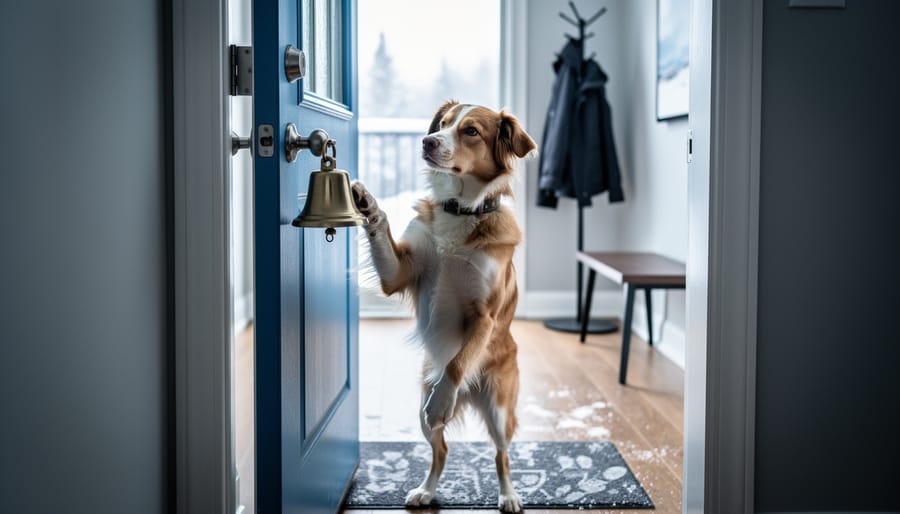
Teaching your dog to ring a bell when they need to go outside takes about one to two weeks of consistent training and works by pairing the sound of the bell with the act of going through the door. The method is simple: every time you take your pup out to do their business, you guide their paw or nose to ring the bell first, then immediately open the door and reward them outside. Once they connect bell-ringing with door-opening, they’ll start doing it on their own.
This training approach is particularly valuable for Ottawa dog owners dealing with apartment living or harsh winter conditions. When you can’t constantly watch for subtle bathroom cues or when your dog is bundled in a coat and harder to read, a clear audible signal eliminates guesswork. You’ll know exactly when they need to go out, which prevents accidents and reduces the stress of wondering whether that whine means potty time or just attention-seeking.
The process requires minimal supplies. You’ll need a bell designed for dogs (priced between eight and thirty dollars in 2026, depending on whether you choose a basic hanging bell or a smart wireless model), treats your dog loves, and about five minutes of focused attention each time you head outside. Position matters: the bell should hang at your dog’s nose or paw height near the door you use most often for bathroom breaks.
Consistency makes or breaks bell training. Every single trip outside needs to include the bell, which means everyone in your household must follow the same routine. The payoff is worth it. Within days, most dogs grasp the connection, and within two weeks, you’ll have a reliable communication system that works whether you’re in a quiet Westboro bungalow or a busy downtown condo.
What You’ll Need to Get Started
You’ll need just a few basic supplies to start bell training, though your choices depend on your budget and how tech-savvy you want to get.
First, pick your bell. Traditional hanging bells attach to your doorknob with a rope or strap, letting your dog nudge them with a nose or paw. These simple options run about $8 to $12 and work perfectly well for most dogs. Button-style bells sit on the floor or mount on the wall at nose height, your dog presses a large, easy-to-hit target instead of swatting at a hanging object. For Ottawa homes where you might have dogs of varying sizes or mobility concerns, buttons can be easier to use. The Mighty Paw Smart Bell 2.0, available on Amazon for $29.99, combines a wireless button with a plug-in receiver, giving you flexibility to place the chime where you’ll actually hear it (handy in larger houses or if your door is in a basement). Other smart options like the CallTou WiFi model (prices around $28.99 to $30.99 when in stock) connect to your phone, though that feature matters more if you’re often in another part of the house. Budget wireless doorbells designed for potty training start as low as $18.24 and do the same job without app integration.
Beyond the bell itself, gather these essentials:
- High-value training treats (small, soft pieces your dog loves)
- A standard leash for controlled outdoor trips
- Enzymatic cleaner for accidents during the learning phase
- Patience and a consistent schedule
Smart bells offer convenience, you can hear the alert anywhere in your home, which helps during Ottawa winters when you’re less likely to linger near cold exterior doors. Basic bells cost less and never need batteries, but you have to be within earshot. Choose based on your home layout and whether you’re frequently in rooms far from your main door.
Important Safety and Setup Considerations
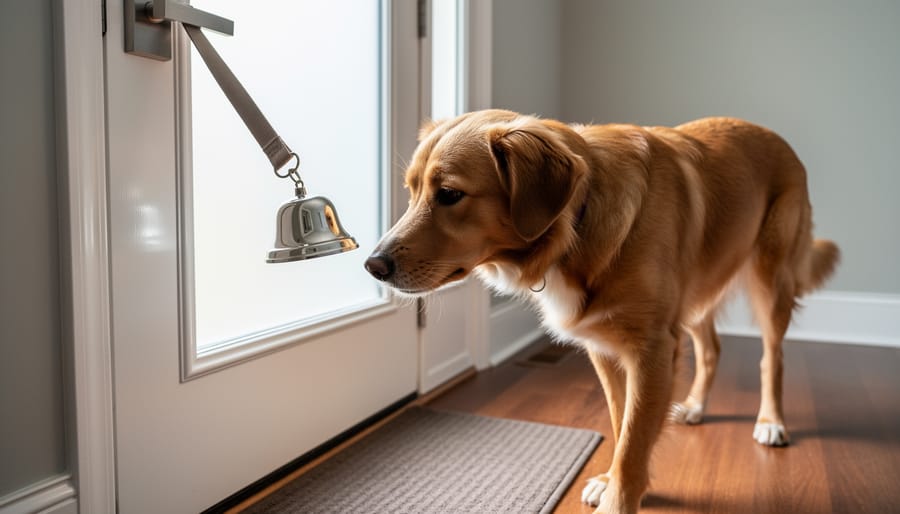
Before you hang that bell, take a few minutes to set up properly, getting these details right now prevents frustration and confusion later.
Start by choosing the correct placement height. Mount the bell so your dog can comfortably reach it with their nose or paw while standing naturally. For small breeds, this typically means 6-10 inches from the floor; medium dogs need 12-18 inches; large dogs work best with placement around 20-24 inches high. If your dog has to stretch uncomfortably or jump to reach the bell, they’ll avoid using it altogether.
Test the bell’s sound before committing to a location. Ring it yourself at the volume your dog will produce and watch their reaction. If they startle, flatten their ears, or retreat, the bell is too loud. This is especially common with traditional jingle bells that create sharp, high-pitched sounds. Smart bells like the Mighty Paw Smart Bell 2.0 ($29.99) often allow volume adjustment, which helps for noise-sensitive dogs. Never force a frightened dog to interact with a bell that scares them, you’ll create a negative association that undermines the entire training process.
Consider your household’s sound environment too. If you have doorbells, phone alerts, or other chimes that sound similar to your potty bell, your dog will struggle to understand which noise means “time to go outside.” Choose a distinctly different tone, or train during quiet periods when competing sounds are minimal.
Some dogs aren’t ready for bell training yet. Puppies under 12 weeks old typically lack the bladder control needed to make the method work, and dogs who haven’t mastered basic outdoor pottying should focus on that foundation first. Similarly, if your dog is already exhibiting attention-seeking behaviors like excessive barking or pawing at you, address those patterns before introducing a bell they might manipulate for interaction rather than genuine bathroom needs.
The 5-Step Potty Training Bell Method
Step 1: Introduce Your Dog to the Bell
Start this phase indoors, away from the door, so your dog can explore the bell without any pressure to perform. Place the bell on the floor or hold it at nose level and let your dog approach it naturally. When they sniff it, lean toward it, or show any interest, immediately say “yes!” and offer a small treat. Don’t force interaction or push the bell toward them, curiosity works better than coercion.
Repeat this exercise several times throughout the day, keeping each session short (two to three minutes). Your goal is simply to build a positive connection: bell equals good things. If your dog ignores the bell completely, try holding a treat near it so they have to get close, then reward the proximity. Some dogs need a few days to warm up, especially if they’re cautious by nature.
Success at this stage looks like your dog willingly approaching the bell when you bring it out, maybe even nosing it without prompting. You’re not looking for deliberate ringing yet, just comfortable, repeated interest. Once your dog consistently shows curiosity and moves toward the bell on their own, you’re ready to move it to the door.
Step 2: Position the Bell at Your Door
Hang your bell at your dog’s nose height when they’re standing normally, not jumping or stretching. For most medium dogs, that’s roughly 6 to 12 inches off the floor; adjust higher or lower based on your specific dog’s build. The goal is easy access without requiring your dog to strain.
Mount the bell on the door frame or wall directly beside the door your dog uses most often for bathroom breaks. Choose the side that doesn’t swing open when the door moves. If you’re using a hanging bell, position it close enough that your dog can nudge it without stepping back from the door.
In Ottawa apartments, you might train on your main exit door even though the actual grass is an elevator ride away. That’s fine, your dog will learn to signal when they need to go out, and you’ll complete the trip together. House owners should pick whichever door leads most directly to the potty spot, though winter might shift your routine to a closer exit when temperatures drop.
Avoid placing bells on multiple doors initially. Pick one consistent location and stick with it until the behavior is rock solid.
Step 3: Teach the Bell-Ringing Action
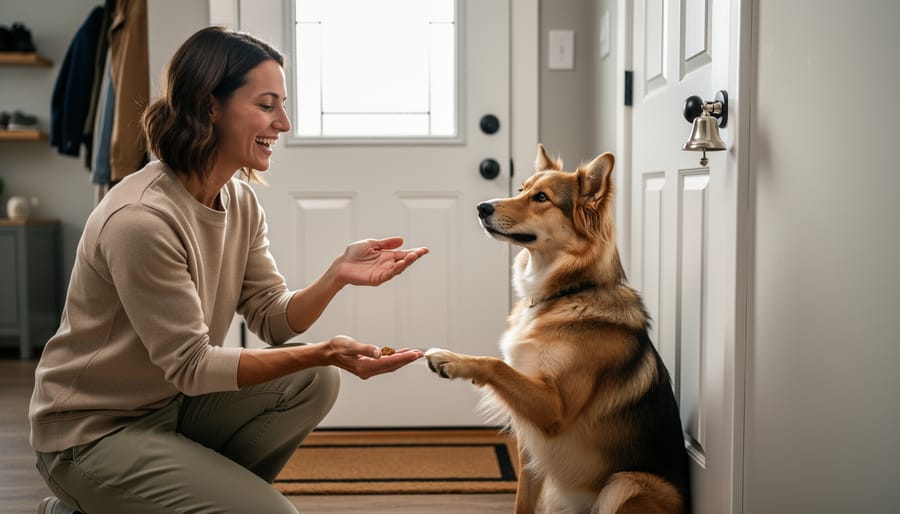
Once your dog shows interest in the bell, it’s time to teach them the actual ringing motion. Hold a small, high-value treat near the bell to guide their nose or paw toward it. The moment they make contact and the bell sounds, mark it with “yes!” and immediately reward them. For button-style bells like the Mighty Paw Smart Bell, you’re looking for a nose press or paw tap. With hanging bells, a nose nudge works best.
Repeat this 5-10 times per session, keeping sessions short and upbeat. Some dogs naturally paw at things while others prefer nose targeting. Work with your dog’s natural tendency rather than forcing a specific method. If they’re hesitant, you can smear a tiny bit of peanut butter on the bell surface to encourage investigation.
Gradually reduce how close you hold the treat to the bell. Start by holding it right against the bell, then an inch away, then several inches away. Your goal is for your dog to deliberately move toward and ring the bell to earn the reward. This shaping process typically takes 2-4 days of consistent practice before most dogs confidently ring the bell on their own when they see you reach for treats near the door.
Step 4: Connect Bell Ringing to Going Outside
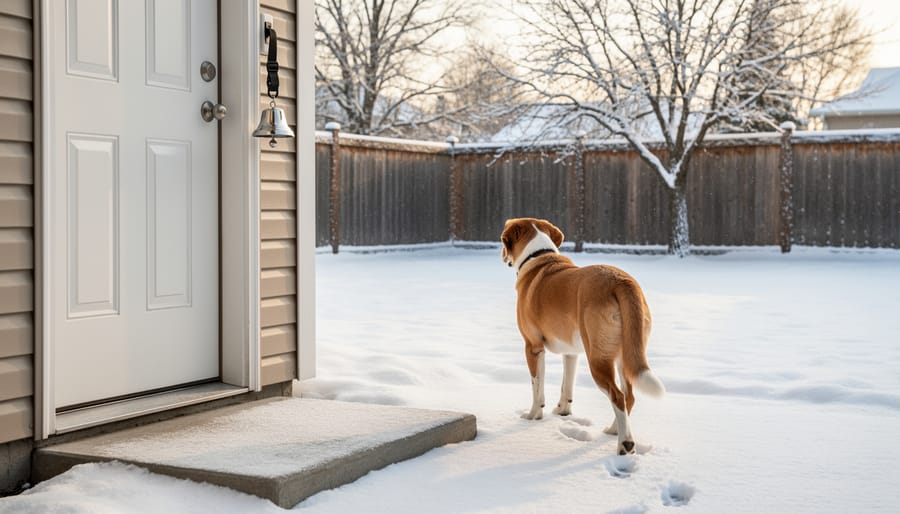
This is where bell training either clicks or falls apart. The moment your dog touches that bell, whether it’s a deliberate ring or an accidental bump, you drop everything and take them outside immediately. No delays to finish your coffee, grab your phone, or put on shoes. This instant response teaches your dog that bell = door opens = outside access, which is the entire point of the method.
During the first week, treat every single bell ring as legitimate, even if your dog just went out five minutes ago. Open the door, walk them to their usual Ottawa potty spots and wait. If they don’t go within two minutes, bring them back inside without fuss or punishment. They’re learning the sequence, not manipulating you, yet.
Consistency matters most when it’s least convenient. If the bell rings at 11 PM during a January cold snap, you still go. Keep a winter coat and boots by the door specifically for these trips. Your speed in responding during these first weeks directly impacts how quickly your dog connects bell-ringing to the outcome they want. Miss the timing even occasionally, and you’ll confuse the association you’re building.
Step 5: Reinforce the Complete Behavior Chain
By this stage, your dog understands the bell signals a trip outside. Now you’re cementing the full sequence so it becomes automatic habit rather than something requiring your constant prompting.
Continue rewarding the complete chain every time: bell ring → immediate door opening → walk outside → successful potty → enthusiastic praise plus treat. Timing matters here. Give the treat within seconds of your dog finishing, not when you’re back inside. This creates the strongest connection between the action and the reward.
Start reducing your physical involvement gradually. If you’ve been guiding your dog’s nose or paw to the bell, wait a few extra seconds to see if they’ll do it independently first. When they ring on their own, make that reward extra special, double treats, jackpot praise, genuine excitement in your voice. You’re showing them that self-initiated ringing earns the biggest payoff.
Watch for regression during Ottawa’s harsh winter weeks. Dogs sometimes resist the bell when they know it means going out into freezing temperatures. Don’t skip the routine. Bundle up, keep outdoor time brief but consistent, and maintain your rewards. If you let them skip the bell just because it’s cold, you’ll undo weeks of work.
Address false alarms calmly. When your dog rings but doesn’t potty within five minutes outside, simply bring them back in without fanfare or treats. No scolding, they’re experimenting with the system. Wait fifteen minutes, then take them out on leash without the bell to see if they actually need to go. Most dogs stop attention-seeking rings when they learn it doesn’t get them playtime, only quick business trips.
Expect the behavior to fully solidify within two to four weeks of this reinforcement phase, though some dogs need longer. Keep treats handy near the door for at least three months to prevent backsliding.
How to Know It’s Working (and What to Do Next)
You’ll know your dog truly understands bell training when they start ringing on their own before you head to the door. Most dogs take two to four weeks to build this habit, though younger puppies might need six weeks while some quick learners master it in ten days. Watch for your dog approaching the bell when they need to go, rather than waiting for you to prompt them or lead them to the door.
True understanding looks different from accidental ringing. A dog who gets it will ring with purpose, then wait by the door or look at you expectantly. They’ll do this during their usual potty times, after meals, first thing in the morning, after play sessions. Accidental or playful ringing happens at random times, your dog doesn’t wait after ringing, or they ring repeatedly in quick succession like a game.
Once your dog rings reliably three to five times daily without prompting and has gone a full week with no accidents, you can start easing off constant supervision. Continue responding every time they ring for at least another month to cement the behavior through positive reinforcement. Keep treats by the door during this maintenance phase.
If you move to a new home or need to add another exit door, mount a second identical bell at the new location. Take your dog to it several times daily and run through the basic sequence again, it usually clicks within a few days since they already know the concept. For Ottawa households switching between front and back doors seasonally, train both doors from the start so winter weather doesn’t disrupt the routine.
Regression happens, especially during schedule changes or after vacations. If your dog stops ringing consistently, go back to Step 4 for a few days, ring the bell yourself before each trip outside and reward heavily when they participate.
Common Questions About Dog Potty Training Bells
How long does it typically take to train a dog to use a potty bell?
Most dogs grasp the basic concept within one to three weeks with consistent practice, though full reliability often takes four to eight weeks. Younger puppies and dogs with prior house training experience tend to learn faster, while older dogs or those new to structured training may need extra patience.
What should I do if my dog rings the bell but doesn’t actually need to go?
Always take them outside anyway to preserve the association, but don’t reward them if they don’t eliminate within three to five minutes. They may be testing the system or seeking attention, stay calm, bring them back inside without fuss, and resist giving treats or praise for false alarms.
Can older dogs learn to use a potty training bell?
Absolutely. Senior dogs can learn bell training just as effectively as puppies, though they might take a bit longer to adopt a new routine if they’ve used different signals for years. The method works particularly well for older dogs who already understand basic house training rules but need a clearer way to communicate their needs.
Do potty bells work in Ottawa apartments without direct yard access?
Yes, bells work great in apartments, you just need to respond quickly since outdoor access requires elevator rides or stairwell walks. Position the bell at whichever door you use most consistently, and be prepared for more frequent trips during initial training, especially during Ottawa’s winter months when outdoor time is brief.
How do I handle bell training with multiple dogs in one household?
Train one dog at a time if possible, starting with the one who shows the most interest or has the strongest house training foundation. Once the first dog reliably uses the bell, others often learn by observation and imitation, though you’ll still need to reward each dog individually when they ring correctly.
Keep in mind that every dog learns at their own pace regardless of breed or background. If you’re struggling with bell training or feel overwhelmed by the process, professional guidance can make a significant difference. Understanding typical dog training cost helps you budget for expert support if you decide hands-on help would benefit your specific situation. Whether you’re working with a smart bell like the Mighty Paw Smart Bell 2.0 ($29.99) or a traditional hanging option, the core principles remain the same, consistency, patience, and immediate response to your dog’s signals create lasting success.
Bell training transforms the guessing game of house training into clear, two-way communication between you and your dog. With the right bell, consistent application of the five-step method, and patience tailored to your dog’s learning pace, most Ottawa owners see results within two to six weeks. Remember that setbacks during winter months or busy periods are normal, what matters is returning to the routine, not achieving perfection immediately.
Start with a bell that suits your living situation and budget, whether that’s a simple hanging option or a smart model with app notifications. Set realistic expectations: your dog won’t master this overnight, and there will be false alarms along the way. That’s part of the learning process, not a sign of failure.
If you’re struggling with the training steps or need personalized guidance for your specific dog, our training class guide can help you find professional support, or reach out to Ottawa Dog Grooming directly for hands-on assistance with bell training and other behaviour concerns.